




What's Happening?
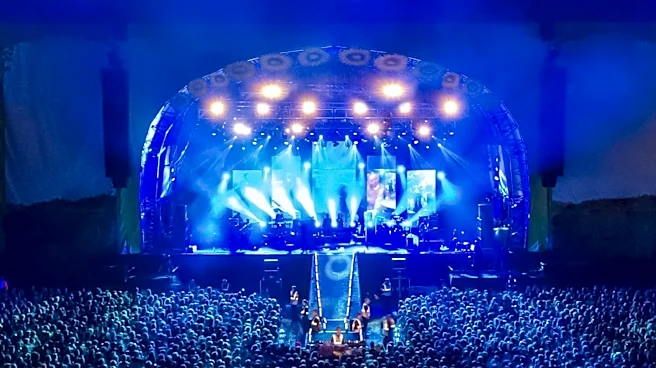
Irish rap trio Kneecap delivered a politically charged performance at the Reading Festival, headlining on Sunday evening. The band, consisting of Moglai Bap and Mo Chara, with a stand-in DJ for the absent DJ Provai, used their platform to voice strong
political opinions. A Palestinian flag was displayed on the DJ deck throughout their set. Midway through their performance, Kneecap urged festivalgoers to consider the suffering in Palestine, drawing parallels with Irish history and experiences of 'displacement, colonialism and forced starvation.' They led chants of 'f*** Benjamin Netanyahu, and free, free Palestine!' Additionally, the band criticized British politician Andy Burnham, leading the crowd in chants of 'Andy Burnham's a wanker' after stating that Burnham had declared a united Ireland 'off the table.' Their set included tracks from their albums 'FENIAN' and 'Fine Art,' as well as older material like the 2019 single 'Get Your Brits Out.' The performance concluded with their 2025 track 'THE RECAP,' which addresses media scrutiny and political backlash related to their pro-Palestine stance and past police investigations.
Why It's Important?
This event highlights the increasing intersection of music festivals and political activism, particularly concerning international conflicts and national identity. Kneecap's use of a prominent music festival stage to express strong anti-Israeli and anti-British sentiments demonstrates how artists can leverage their platforms to influence public opinion and mobilize audiences. The band's vocal support for Palestine and criticism of political figures like Benjamin Netanyahu and Andy Burnham could resonate with a segment of the festival-going youth, potentially shaping their political awareness and engagement. The incident also underscores the ongoing debate about freedom of speech in public performances and the potential for such expressions to generate controversy and discussion beyond the immediate event. For the music industry, it signals a trend where artists are increasingly unafraid to take definitive political stances, which can either alienate or galvanize their fan base and broader society.
What's Next?
Following their politically charged performance, Kneecap is likely to continue facing scrutiny and potentially further controversy. Their track 'THE RECAP' explicitly addresses past media attention and police investigations related to their pro-Palestine views, suggesting a continued engagement with these themes in their music and public appearances. The band's actions at Reading Festival may lead to increased discussion and debate within political and cultural circles regarding the role of artists in political discourse. It could also prompt reactions from political figures or organizations mentioned, potentially leading to official statements or further public commentary. For the band, this performance could solidify their image as politically outspoken artists, potentially expanding their audience among those who share their views, while also drawing criticism from opposing factions. Future performances and releases are expected to maintain this political edge, continuing to challenge and provoke their audience.
Beyond the Headlines
The performance by Kneecap at Reading Festival delves into deeper implications concerning cultural identity, historical grievances, and contemporary geopolitical issues. By drawing parallels between Irish history and the situation in Palestine, the band taps into a shared narrative of colonialism and displacement, which can resonate powerfully with audiences who feel marginalized or oppressed. This approach transcends simple political protest, embedding their activism within a broader historical and cultural context. The band's consistent anti-British stance, exemplified by their song 'Get Your Brits Out,' reflects enduring tensions and republican leanings within certain segments of Irish society. The dismissal of unlawful terror-related proceedings against band member Mo Chara earlier this year also highlights the complexities of legal frameworks surrounding political expression and the challenges authorities face in balancing national security concerns with artistic freedom. This ongoing interplay between art, politics, and historical memory suggests a persistent cultural dialogue that extends far beyond the music festival stage.