
What's Happening?
The Israel Defense Forces (IDF) Medical Command is revolutionizing its medical response capabilities by integrating artificial intelligence (AI) and drone technology. This initiative aims to improve the
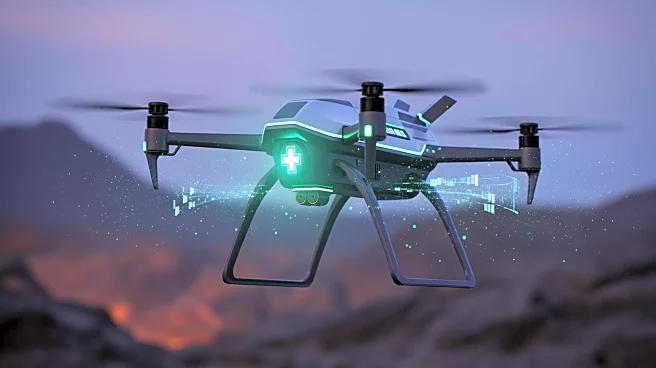
treatment of post-traumatic stress disorder (PTSD) and expedite the delivery of whole blood to soldiers in conflict zones. The IDF has developed AI systems to assist mental health professionals in diagnosing and treating PTSD, ensuring that human oversight remains integral to the process. Additionally, drones are being utilized to transport whole blood to the front lines, significantly reducing the time it takes to provide life-saving medical care. These advancements are part of a broader effort to enhance the IDF's medical response during and after the 2023-2025 Middle East war.
Why It's Important?
The integration of AI and drone technology in military medical operations represents a significant advancement in battlefield healthcare. By reducing the time required to deliver critical medical supplies and improving mental health treatment, the IDF is setting a precedent for modern military medical practices. This approach not only increases the survival rates of wounded soldiers but also addresses the psychological impact of warfare. The use of AI in mental health care allows for more efficient diagnosis and treatment, potentially improving the quality of life for soldiers suffering from PTSD. The IDF's innovations could influence other military organizations worldwide, prompting them to adopt similar technologies to enhance their medical capabilities.
What's Next?
The IDF plans to continue refining its use of AI and drone technology, with a focus on overcoming logistical challenges and ensuring the safety and effectiveness of these systems. Future developments may include expanding the use of drones for other medical supplies and further integrating AI into various aspects of military healthcare. The IDF's ongoing collaboration with the private sector and other governmental bodies will be crucial in advancing these technologies. As these systems become more established, they may be adopted by other countries, potentially transforming military medical practices on a global scale.
Beyond the Headlines
The ethical implications of using AI in medical decision-making are significant, particularly concerning privacy and the potential for errors. Ensuring that human oversight remains a key component of AI systems is essential to maintaining trust and effectiveness. Additionally, the use of drones in conflict zones raises questions about airspace management and the potential for accidental engagements. As these technologies evolve, addressing these concerns will be critical to their successful implementation. The IDF's experience may provide valuable insights into balancing technological innovation with ethical considerations in military operations.