





What's Happening?
The U.S. Department of State is set to launch a pilot program for online passport applications for certain first-time applicants and individuals ineligible for online renewals. This initiative, detailed in a Federal Register document, will commence on November
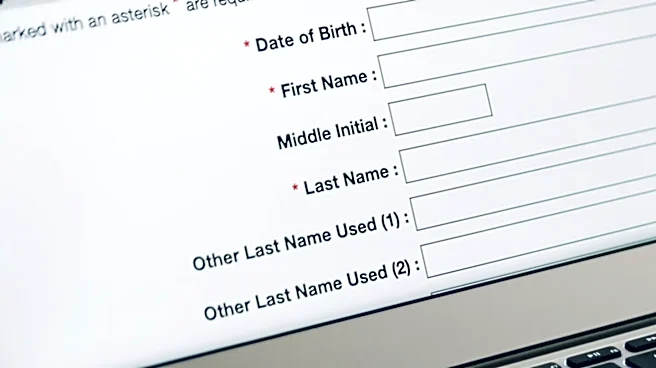
16, 2026, and conclude on November 20, 2027. The online application will be accessible via America.gov, the federal government's AI-powered chatbot. Initially, the pilot targets U.S. adults who previously held a valid U.S. passport but cannot use the DS-82 renewal process, as well as first-time adult applicants who can prove U.S. citizenship with a Certificate of Naturalization. Applicants will undergo a qualification process on America.gov, verify their identity through Login.gov, upload a passport photo, select delivery options, and record an oath. A passport agent will then review the submitted materials. The department processed approximately 13.9 million DS-11 applications in fiscal year 2025, with the current paper application taking an average of 85 minutes to complete.
Why It's Important?
This pilot program represents a significant step towards modernizing government services and improving efficiency for U.S. citizens. By offering an online option for first-time passport applications, the State Department aims to reduce the time burden on applicants, potentially streamlining a process that currently requires substantial manual effort. The integration with America.gov, an AI-powered chatbot, also highlights a broader federal strategy to leverage advanced technology for public services, enhancing accessibility and user experience. If successful, this initiative could alleviate administrative backlogs and improve overall processing times for passports, which are critical for international travel and identification. The expansion of online services could also set a precedent for other government agencies to adopt similar digital transformation efforts, ultimately benefiting a wider range of public interactions with federal services.
What's Next?
The State Department plans to evaluate the pilot program's effectiveness, particularly regarding time savings for applicants. Based on testing and technological advancements, the department anticipates expanding the pilot to include applicants using U.S. birth certificates, Certificates of Citizenship, Consular Reports of Birth Abroad, and eligible applicants located overseas. This phased expansion suggests a cautious yet progressive approach to fully digitizing the passport application process. Future developments will likely involve refining the online platform, addressing any technical challenges, and gathering user feedback to optimize the system. The success of this pilot could influence the permanent implementation of online applications for a broader spectrum of passport services, potentially leading to a more efficient and user-friendly system for all U.S. citizens seeking passport services.
Beyond the Headlines
The introduction of an online passport application system through an AI-powered platform like America.gov signifies a deeper shift in how government services are delivered. This move not only aims for operational efficiency but also reflects a commitment to digital inclusivity, making essential services more accessible to a tech-savvy populace. However, it also raises questions about digital equity for those without reliable internet access or digital literacy. The requirement for identity verification through Login.gov and the recording of an oath introduce new security protocols and data privacy considerations that will need continuous monitoring and robust safeguards. This digital transformation could also lead to a re-evaluation of staffing needs within the State Department, potentially shifting roles from manual processing to digital oversight and customer support for online systems. The long-term implications could include a more agile and responsive government bureaucracy, but also a need for ongoing investment in cybersecurity and digital infrastructure.