








What's Happening?
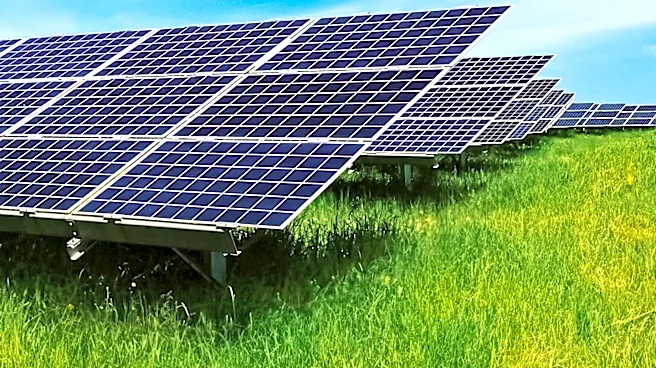
Governor Tony Evers recently visited Casa Esther, a nonprofit organization in Omro, Wisconsin, to advocate for renewable energy initiatives. During his visit, Governor Evers inspected the newly installed solar panels on the nonprofit's roof, highlighting
their potential to generate significant cost savings. This visit is part of a broader state effort to promote clean energy, which has seen over $3 million in grant money awarded this past spring to support 270 different solar investment projects across Wisconsin. Casa Esther itself received a $5,000 grant as part of the 'Renew Wisconsin' push, which distributed $30,000 among six organizations. Collectively, these six projects are expected to add more than 300 kilowatts of solar energy capacity.
Why It's Important?
The promotion of renewable energy by Governor Evers and the state's investment in solar projects are significant for Wisconsin's energy future and economic landscape. By supporting initiatives like 'Renew Wisconsin,' the state is encouraging the adoption of clean energy technologies, which can lead to reduced reliance on fossil fuels, lower energy costs for businesses and residents, and the creation of green jobs. For nonprofits like Casa Esther, the cost savings from solar panels can free up resources that can be redirected to their core missions, enhancing their community impact. The collective addition of over 300 kilowatts of solar energy from these projects contributes to the state's overall renewable energy capacity, moving Wisconsin towards a more sustainable and resilient energy grid. This also positions Wisconsin to potentially attract further investment in the renewable energy sector.
What's Next?
The state is likely to continue its efforts to expand renewable energy adoption through grants, incentives, and public awareness campaigns. The success of projects like those funded by 'Renew Wisconsin' could serve as models for future initiatives, potentially leading to increased funding and broader participation from organizations and businesses. There may be further legislative actions or policy changes aimed at accelerating the transition to clean energy, such as updated building codes or tax incentives for solar installations. The focus on renewable energy also aligns with national trends towards sustainability, suggesting that Wisconsin could see continued growth in its green economy sector. The long-term goal is to reduce carbon emissions and enhance energy independence for the state.
Beyond the Headlines
The push for renewable energy in Wisconsin extends beyond immediate economic benefits and environmental concerns. It touches upon broader themes of energy independence, technological innovation, and community empowerment. By investing in solar and other clean energy sources, Wisconsin is fostering a more decentralized energy system, which can be more resilient to disruptions and less susceptible to volatile fossil fuel markets. This shift also encourages local economic development, as solar installations often rely on local labor and supply chains. Furthermore, the involvement of nonprofits like Casa Esther highlights the social equity aspect of clean energy, ensuring that the benefits of renewable power are accessible to diverse communities. This initiative could also inspire educational programs and workforce training to prepare the next generation for careers in the burgeoning renewable energy industry.