



What's Happening?
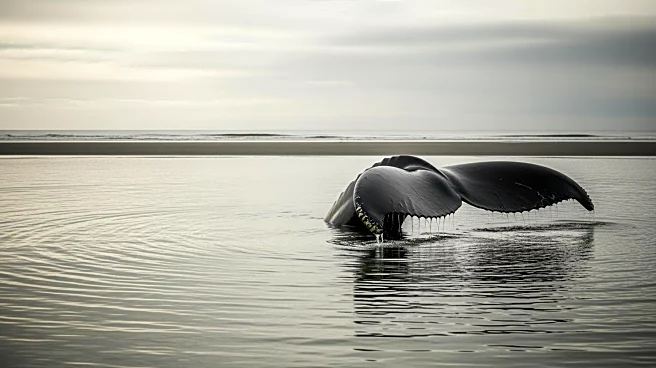
A humpback whale stranded in Germany's Baltic Sea is showing signs of weakening, raising concerns about its ability to return to the Atlantic Ocean. Despite several rescue attempts, including efforts to create waves to help the whale swim free, the animal
remains stuck near Wismar. Experts have established a restricted area around the whale to allow it to rest and potentially regain strength. However, the whale's condition is deteriorating, with decreased activity and respiratory rate. The whale, which may have been injured by a fishing net, is unable to survive long-term in the Baltic Sea due to its low salt concentration and lack of suitable nutrition.
Why It's Important?
The situation highlights the challenges faced by marine wildlife in unfamiliar environments. The whale's plight has captured public attention in Germany, sparking discussions about marine conservation and the impact of human activities on wildlife. The incident underscores the importance of protecting marine habitats and ensuring safe migration routes for marine animals. The whale's struggle also raises awareness about the potential consequences of environmental changes and human interference in natural ecosystems. The outcome of this situation could influence future policies and efforts aimed at preserving marine biodiversity and preventing similar incidents.
What's Next?
Efforts to monitor and assist the whale will continue, with experts hoping for a natural recovery that allows the whale to navigate back to the Atlantic. The situation remains critical, as the whale must traverse narrow straits and cover a significant distance to reach safer waters. The outcome will depend on the whale's ability to regain strength and the effectiveness of ongoing conservation efforts. The incident may prompt further discussions on marine protection measures and the need for international cooperation in safeguarding migratory routes for marine species.