


What's Happening?
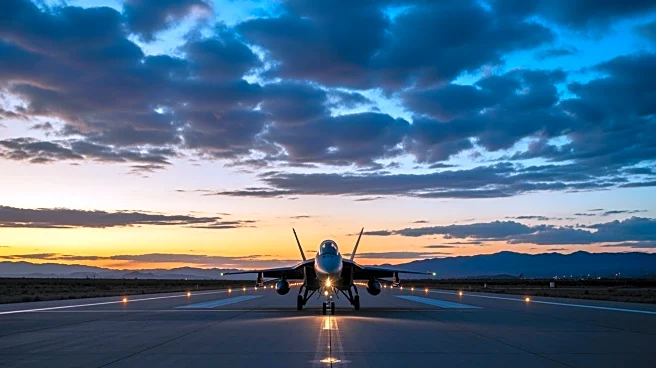
Recent satellite images from MizarVision, a Chinese company, reveal that the United States has been transferring aircraft and equipment to the Ovda Air Base in southern Israel. The images show 11 F-22 fighter jets, with four positioned on the runway,
and a C-17 transport aircraft delivering equipment. This movement is part of a broader U.S. strategy to bolster its military presence in the Middle East, as tensions with Iran persist despite ongoing negotiations. The U.S. has also been observed moving forces to other strategic locations, including Al Udeid Air Base in Qatar and Prince Sultan Air Base in Saudi Arabia. These deployments include various aircraft types such as refueling planes, reconnaissance planes, and transport aircraft.
Why It's Important?
The increased U.S. military presence in the Middle East, particularly in Israel, underscores the strategic importance of the region amid rising tensions with Iran. This move could be seen as a deterrent against potential Iranian aggression and a signal of U.S. commitment to its allies in the region. The deployment of advanced aircraft like the F-22s enhances the U.S. military's operational capabilities, potentially influencing the balance of power in the region. Additionally, the use of satellite imagery by MizarVision highlights the growing role of technology in military intelligence and the ability of other nations, such as China, to monitor U.S. military movements.
What's Next?
As the U.S. continues to reposition its military assets in the Middle East, further developments could include additional deployments or strategic adjustments based on diplomatic negotiations with Iran. The international community will likely monitor these movements closely, as they could impact regional stability and influence ongoing diplomatic efforts. The U.S. may also engage in further military exercises with regional allies to demonstrate readiness and strengthen partnerships.
Beyond the Headlines
The use of satellite imagery by companies like MizarVision raises questions about privacy and security in military operations. The ability to track military movements in real-time could have implications for operational security and strategic planning. Furthermore, the involvement of Chinese companies in monitoring U.S. military activities highlights the complex interplay of global intelligence capabilities and the potential for geopolitical tensions.