







What's Happening?
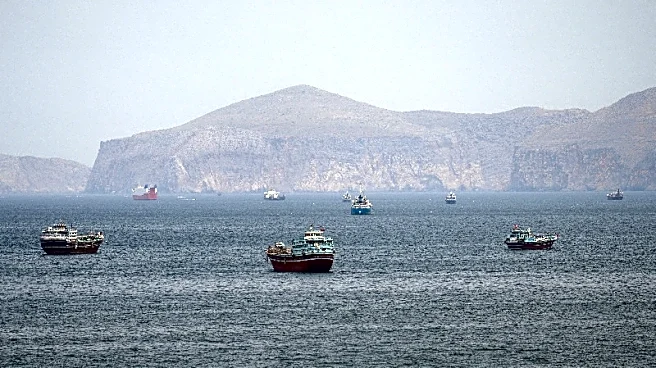
France has drafted a United Nations Security Council resolution aimed at establishing an international mission to restore movement in the Strait of Hormuz. This development comes as the U.S. and Bahrain have been working on a resolution demanding Iran
cease its attacks and mining activities in the strait. The Strait of Hormuz is a critical passage for global energy trade, and its near closure has significantly impacted oil prices. The U.S.-Bahraini resolution has faced delays due to potential vetoes from China and Russia, who argue that the resolution is biased against Iran. France, a veto-wielding member of the Security Council, has not yet supported the U.S. text but is preparing its own initiative to ensure freedom of navigation in the strait. France's President Emmanuel Macron has indicated that Paris is ready to push for an international mission once conditions are favorable and after consultations with Washington and Tehran.
Why It's Important?
The situation in the Strait of Hormuz is crucial due to its role as a major conduit for global oil shipments. The ongoing U.S.-Iran conflict and the strait's near closure have led to increased oil prices, affecting global markets. The diplomatic efforts by France and the U.S. highlight the international community's concern over maintaining open and secure shipping lanes. The potential for a UN-backed resolution could lead to a coordinated international response, which may stabilize the region and reduce tensions. However, the geopolitical dynamics involving major powers like China and Russia complicate the resolution process, as their veto power can block efforts perceived as unfavorable to Iran.
What's Next?
The next steps involve continued diplomatic negotiations at the United Nations, with France potentially submitting its resolution if conditions allow. The U.S. will likely continue to seek broad international support to avoid a veto from China and Russia. The outcome of these discussions could influence future military and diplomatic strategies in the region. Additionally, the international community will be watching for any changes in Iran's actions in the Strait of Hormuz, which could impact the resolution's progress and the broader geopolitical landscape.