


What's Happening?
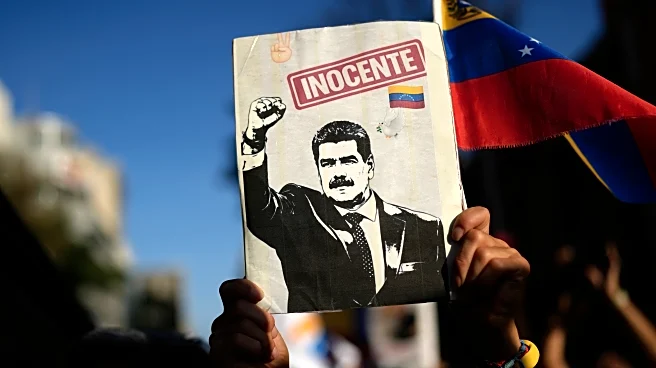
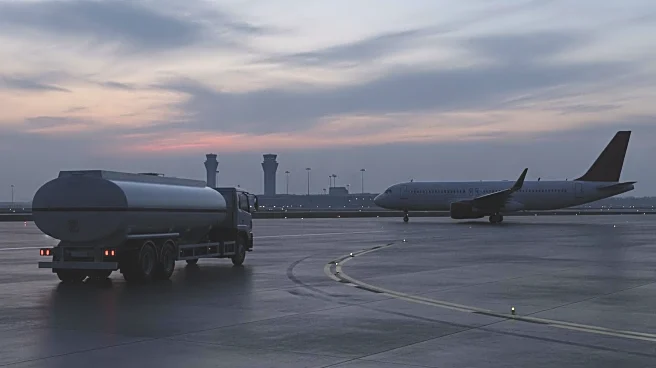
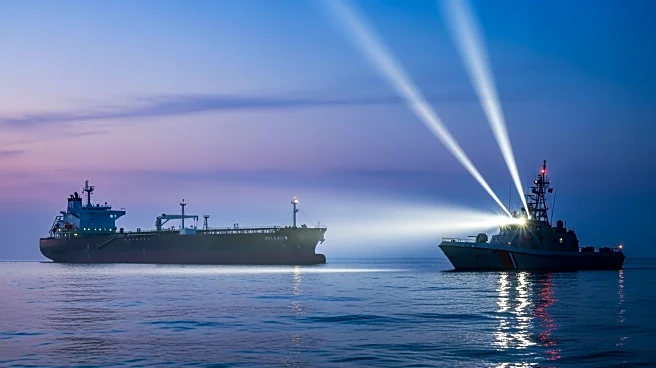
The United States, led by the Coast Guard, is actively pursuing a third oil tanker near Venezuela, escalating efforts to enforce sanctions on the country's crude oil trade. This action follows the recent seizure of two other tankers, marking a significant
increase in U.S. enforcement measures aimed at cutting off oil revenue to Venezuelan President Nicolás Maduro's government. The U.S. sanctions target Venezuela's state-owned energy company PDVSA and individuals associated with the Maduro regime, prohibiting most U.S. transactions involving Venezuelan oil. The sanctions also threaten penalties against foreign entities that facilitate illicit oil sales. The current pursuit is part of a broader strategy to physically disrupt oil shipments that violate these sanctions, with U.S. forces focusing on deceptive practices used by sanctioned shippers, such as frequent flag changes and ship-to-ship transfers.
Why It's Important?
This intensified enforcement of sanctions against Venezuela is significant as it directly impacts the country's ability to generate revenue from its oil exports, which are crucial for its economy. The U.S. actions are intended to weaken the Maduro government by restricting its financial resources. However, these measures have also sparked international tensions, particularly with China, Venezuela's largest crude buyer. The enforcement actions have disrupted global shipping patterns, with tanker operators altering routes to avoid U.S. interdiction. This situation highlights the geopolitical complexities of U.S. sanctions, as they not only affect the targeted nation but also have broader implications for international trade and diplomatic relations.
What's Next?
The ongoing pursuit of the third tanker suggests that the U.S. will continue its aggressive enforcement of sanctions against Venezuela. This could lead to further diplomatic tensions, especially with countries like China that have economic interests in Venezuelan oil. The U.S. may face criticism for its actions, which some view as violations of international law. Additionally, the increased U.S. military presence near Venezuela could lead to heightened regional tensions. The outcome of this enforcement campaign will likely depend on the U.S.'s ability to maintain international support for its sanctions and manage the diplomatic fallout from its actions.
Beyond the Headlines
The U.S. enforcement actions against Venezuelan oil shipments raise important questions about the effectiveness and ethical implications of using sanctions as a tool of foreign policy. While intended to pressure the Maduro government, these measures also risk harming the Venezuelan population by exacerbating economic hardships. Furthermore, the U.S.'s unilateral approach may strain relations with allies and trading partners, potentially leading to a reevaluation of international norms regarding sanctions and maritime enforcement. The situation underscores the need for a balanced approach that considers both the strategic objectives and humanitarian impacts of sanctions.