






What's Happening?
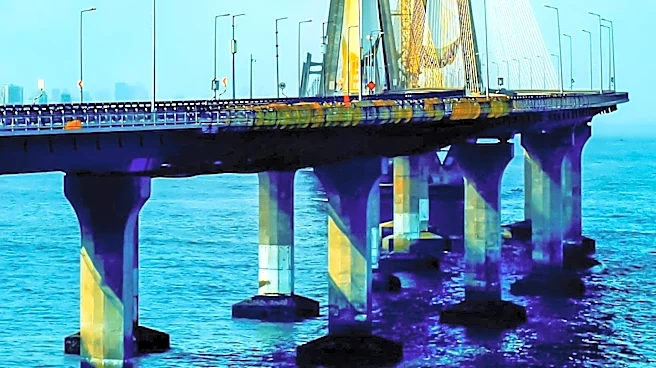
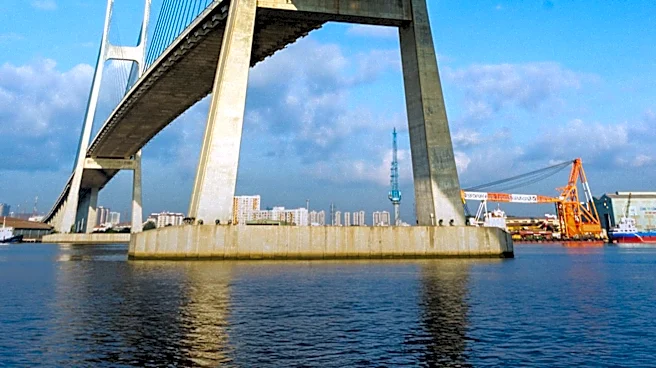
A new bridge connecting Detroit, Michigan, and Windsor, Ontario, is expected to open by the end of July following a resolution of disputes between the United States and Canada. The Gordie Howe International Bridge, named after the legendary Canadian hockey
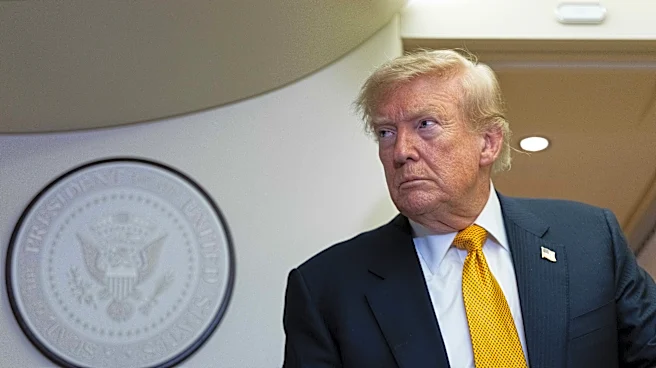
player, was initially scheduled for a ribbon-cutting ceremony in June, but it was postponed due to unresolved issues between the two countries. The delay was partly attributed to President Trump's demands for Canada to cede at least half ownership of the bridge to the U.S. The bridge, which spans 1.5 miles over the Detroit River, is a significant infrastructure project financed by Canada and negotiated by former Michigan Governor Rick Snyder. It aims to alleviate congestion at the existing Ambassador Bridge and the Detroit-Windsor tunnel, enhancing commercial traffic flow between the two cities.
Why It's Important?
The opening of the Gordie Howe International Bridge is crucial for economic relations between the U.S. and Canada, particularly in the automotive and manufacturing sectors that dominate both Detroit and Windsor. The bridge is expected to serve as a vital economic artery, facilitating smoother and more efficient trade. The delay in its opening had political ramifications, becoming a point of contention in Michigan's Senate race, where Democratic candidate Mallory McMorrow attempted to leverage the issue against President Trump and the Republicans. The resolution of the dispute and the bridge's impending opening underscore the importance of cross-border cooperation in infrastructure projects that have significant economic impacts.
What's Next?
With the bridge set to open by late July, commercial traffic is expected to commence before August 1. A formal announcement of the agreement between the U.S. and Canada is anticipated soon, as indicated by Republican Senate candidate Mike Rogers. The bridge's opening will likely be marked by a ribbon-cutting ceremony, although a specific date has not been set. The development may influence political dynamics in Michigan, particularly in the context of upcoming elections, as stakeholders assess the economic benefits and political implications of the new infrastructure.