
What's Happening?
A new law in Oklahoma, effective November 1, will regulate how data centers cool their computers. This legislation aims to tackle the significant water usage associated with data center operations. However,
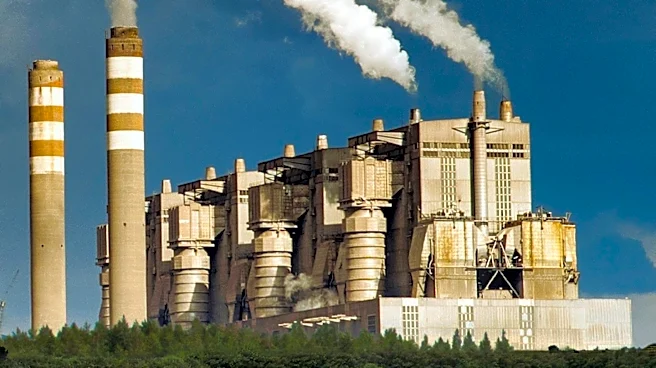
critics suggest that the law may not fully address the broader issue of water consumption related to artificial intelligence (AI) infrastructure. The primary concern raised is that while data centers themselves consume water for cooling, a more substantial portion of water usage in the AI ecosystem is attributed to the power plants that generate the electricity needed to run these data centers. Therefore, by focusing solely on data center cooling, the new law might be missing a significant component of the overall water footprint of AI technologies.
Why It's Important?
This Oklahoma law highlights a growing concern about the environmental impact of the rapidly expanding AI industry, particularly its demand for water. While regulating data center cooling is a step towards sustainability, the critique that it overlooks power plant water consumption points to a critical gap in environmental policy. Power generation, especially from thermal power plants, is notoriously water-intensive, using vast quantities for cooling. If the energy source for AI data centers is not also scrutinized for its water footprint, then policies aimed at conservation may be less effective. This issue is important for states like Oklahoma, which may face water scarcity challenges, as it impacts resource allocation, environmental sustainability, and the long-term viability of high-tech industries within the region. It also raises questions about the comprehensive assessment of environmental impacts for emerging technologies.
What's Next?
The implementation of Oklahoma's new law will likely lead to changes in cooling practices for data centers within the state, potentially driving innovation in more water-efficient cooling technologies. However, the critique regarding power plant water usage suggests that further legislative or regulatory actions might be necessary to address the full scope of water consumption by the AI industry. This could involve policies targeting the water efficiency of power generation, promoting renewable energy sources that are less water-intensive, or requiring more comprehensive environmental impact assessments for new data center developments. Industry stakeholders, including data center operators and AI companies, may face increasing pressure to adopt more holistic sustainability practices that consider their entire supply chain's environmental footprint, from energy generation to data processing.
Beyond the Headlines
The debate surrounding Oklahoma's data center water law reveals a deeper challenge in regulating the environmental impact of rapidly evolving technologies like AI. The interconnectedness of energy production and consumption means that addressing one aspect of environmental impact (e.g., data center cooling) without considering others (e.g., power plant water use) can lead to incomplete solutions. This situation prompts a broader discussion on the need for integrated environmental policies that account for the entire lifecycle and supply chain of technological infrastructure. It also underscores the importance of public and scientific scrutiny in identifying overlooked environmental costs, pushing for more comprehensive and effective regulatory frameworks. As AI continues to grow, the ethical and environmental responsibilities of its development and deployment will become increasingly prominent, influencing future policy decisions and corporate sustainability strategies.