







What's Happening?
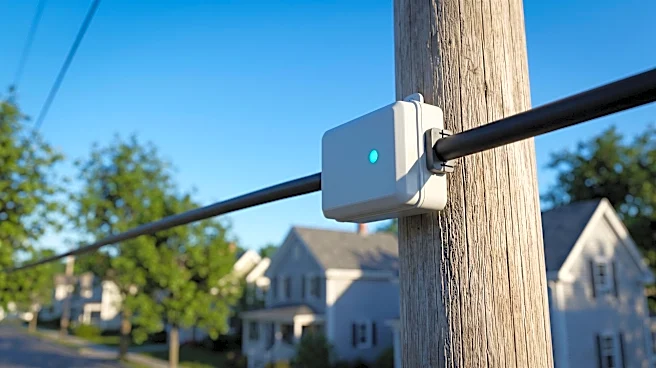
National Grid is investing in and deploying new Early Fault Detection (EFD) sensors across its electric system to identify potential problems before they lead to power outages. These sensors continuously monitor the electric grid for signs of equipment
failure, such as deteriorating equipment, emerging circuit phase degradation, and vegetation encroachment. By detecting issues early, National Grid crews can schedule planned repairs, thereby preventing unplanned service interruptions for customers. The company has conducted a comprehensive review of underperforming circuits, particularly in the Worcester Central Region of Massachusetts. Based on historical reliability data, two circuits in Leominster, Massachusetts, were identified as prime candidates for EFD system deployment, and sensors have now been installed in these areas. John Franklin, vice president for network management for National Grid, stated that this technology provides another tool to identify equipment problems proactively, improving customer experience and shifting work from emergency response to planned maintenance.
Why It's Important?
This initiative is crucial for enhancing the reliability and resilience of the electric grid in the U.S., particularly in regions served by National Grid. Proactive fault detection can significantly reduce the frequency and duration of power outages, which have substantial economic and social impacts. For businesses, consistent power supply is vital for operations, and fewer outages mean less downtime and financial losses. For residents, it ensures uninterrupted access to essential services and reduces inconvenience. The shift from reactive emergency repairs to planned maintenance also offers cost efficiencies for National Grid, as planned work is generally less expensive than emergency responses. This investment aligns with broader national efforts to modernize aging infrastructure and integrate advanced technologies to create a smarter, more robust grid. Furthermore, by identifying vulnerable equipment before severe weather events, the technology can mitigate the impact of storms, a growing concern due to climate change.
What's Next?
National Grid plans to expand the deployment of Early Fault Detection sensors to other circuits across its service territory. Circuits in the Merrimack Valley and North Shore regions are currently undergoing a selection review process to determine future opportunities for sensor installation. The company will continue to leverage these sensors to identify potential equipment problems, allowing for planned maintenance and further improving grid reliability. This ongoing investment in preventative technologies is expected to extend the lifespan of existing equipment and reduce costly emergency restoration work. The success of these deployments in areas like Leominster, Athol, Attleboro, Spencer, and Harvard will likely inform future strategies for grid modernization and technology adoption across National Grid's operations, potentially influencing other utility companies to adopt similar proactive maintenance approaches.
Beyond the Headlines
The adoption of Early Fault Detection sensors represents a significant step towards a more intelligent and self-healing electric grid. This technological advancement has broader implications for cybersecurity, as a more interconnected and sensor-laden grid requires robust protection against cyber threats. The data collected by these sensors could also provide valuable insights for predictive analytics, enabling utilities to forecast equipment failures and optimize maintenance schedules more effectively. This shift towards data-driven grid management could lead to a more efficient allocation of resources and a reduction in operational costs, ultimately benefiting consumers through potentially stable or lower rates. Moreover, the increased reliability of the grid, facilitated by such technologies, is essential for supporting the integration of renewable energy sources and electric vehicles, which demand a stable and resilient power infrastructure. The ethical implications of extensive data collection on infrastructure performance and potential privacy concerns, though not directly addressed, could become more prominent as these systems become more widespread.