



What's Happening?
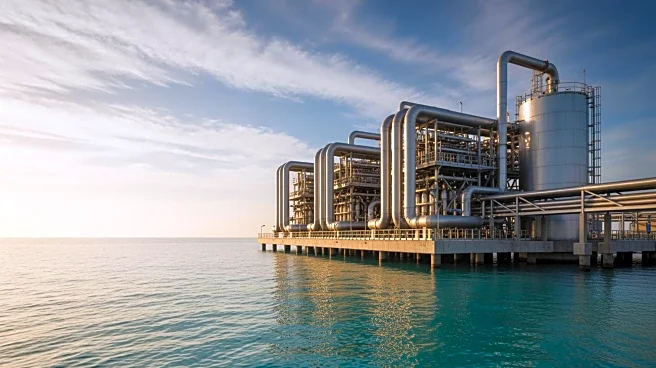
The Persian Gulf region, heavily reliant on desalination for its water supply, faces significant risks due to ongoing regional conflicts. Desalination plants, crucial for providing drinking water to countries like Kuwait, Oman, and Saudi Arabia, are vulnerable
to missile and drone strikes. Recent conflicts have already brought fighting close to key desalination infrastructure, with reports of damage to facilities in Bahrain and the United Arab Emirates. The potential for cyberattacks on water infrastructure is also a growing concern, with past incidents involving Iran-aligned groups targeting American water utilities. The situation underscores the fragility of water security in the region, where desalination is essential for sustaining populations and economies.
Why It's Important?
The vulnerability of desalination plants in the Persian Gulf highlights the critical intersection of water security and regional stability. As these facilities are essential for providing drinking water, any disruption could lead to severe humanitarian and economic consequences. The reliance on desalination in an arid region makes these plants strategic targets in conflicts, potentially exacerbating tensions and leading to broader instability. The situation also raises concerns about the security of critical infrastructure globally, as similar vulnerabilities could exist in other regions dependent on desalination or other centralized water systems.
What's Next?
Gulf states may need to invest in enhancing the security and resilience of their desalination infrastructure to mitigate risks from both physical and cyber threats. This could involve developing more robust backup systems, diversifying water sources, and increasing regional cooperation to address shared vulnerabilities. International efforts to uphold norms against targeting civilian infrastructure could also play a role in reducing the risk of attacks. As climate change continues to impact water availability, the region may explore alternative water management strategies to reduce reliance on desalination.
Beyond the Headlines
The situation in the Persian Gulf reflects broader challenges in balancing technological advancements with security concerns. The reliance on energy-intensive desalination processes also raises environmental issues, as these plants contribute to carbon emissions and marine ecosystem disruptions. The ongoing conflicts and their impact on water infrastructure highlight the need for comprehensive approaches to regional security that consider both immediate threats and long-term sustainability. The potential for similar vulnerabilities in other regions underscores the importance of global cooperation in addressing water security challenges.