






What's Happening?
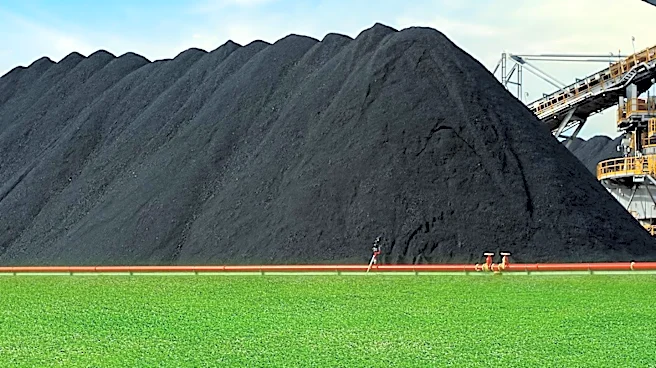
China is significantly expanding its coal infrastructure, accounting for nearly two-thirds of the global pipeline in coal capacity under prospective projects. According to Global Energy Monitor data, China has 1,263.1 GW of operating coal-fired generation
capacity, which is 56.7% of the global total. Additionally, China and India together hold 94% of all coal capacity under construction worldwide. This expansion includes 204.2 GW under construction, representing 78.4% of all coal-fired capacity currently being built globally. The coal-to-chemicals sector in China is also growing, where coal is used as a feedstock for products like plastics and fertilizers, providing an alternative to petroleum.
Why It's Important?
China's coal expansion has significant implications for global energy markets and environmental policies. The country's reliance on coal as a primary energy source underscores its strategic approach to energy security, especially in light of geopolitical tensions affecting oil supplies. This expansion could impact global efforts to reduce carbon emissions, as coal is a major source of greenhouse gases. The increased coal capacity may also influence global coal prices and trade dynamics, affecting countries that export coal to China. Furthermore, China's coal strategy highlights the challenges of balancing energy security with environmental sustainability.
What's Next?
China's continued investment in coal infrastructure suggests that coal will remain a critical component of its energy strategy. This could lead to increased scrutiny from international environmental groups and pressure on China to accelerate its transition to renewable energy sources. The global community may also respond with policy measures aimed at reducing coal dependency and promoting cleaner energy alternatives. Additionally, China's coal expansion could influence other countries' energy policies, particularly those in regions heavily reliant on coal exports to China.