




What's Happening?
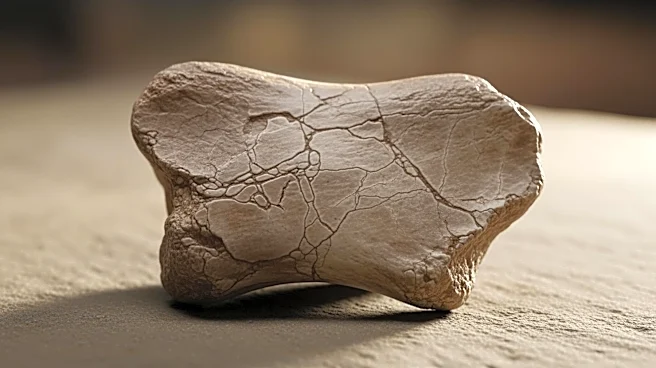
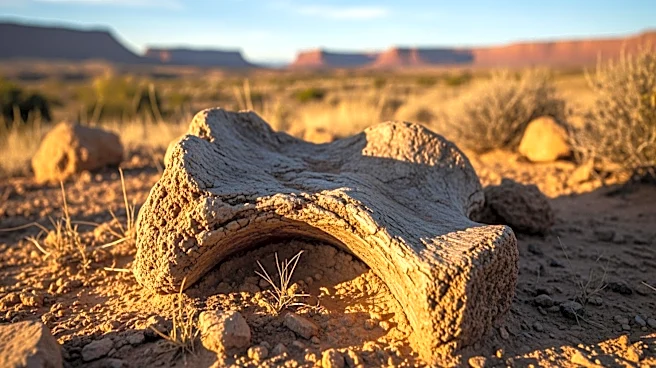
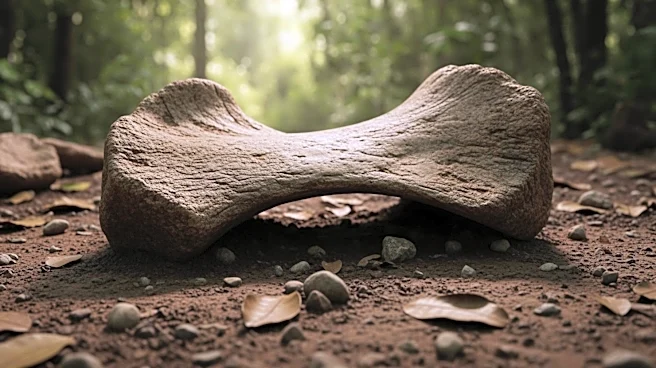
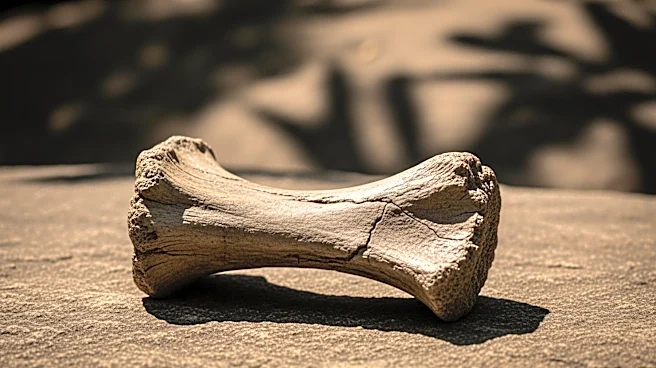
Researchers have unearthed a massive dinosaur fossil in New Mexico, believed to be from a giant tyrannosaur that lived approximately 74 million years ago. The discovery was made in the Hunter Wash Member of the Kirtland Formation and analyzed by a team
from the University of Bath, Montana State University, and the New Mexico Museum of Natural History and Science. The fossil, a tibia measuring 96 centimeters in length and 12.8 centimeters in width, is considered to be one of the oldest known giant tyrannosaurs in North America. This finding could potentially reshape the understanding of tyrannosaur evolution, as it suggests that large-bodied tyrannosaurs appeared earlier than previously thought. The researchers explored several hypotheses regarding the identity of the dinosaur, ultimately suggesting it might be an early member of the Tyrannosaurini group, which includes the famous Tyrannosaurus rex.
Why It's Important?
This discovery is significant as it challenges existing theories about the evolution and geographical origins of giant tyrannosaurs. The fossil's age and size suggest that these massive predators evolved earlier than previously believed, which could lead to a reevaluation of the evolutionary timeline of tyrannosaurs. Additionally, the find supports the theory that giant tyrannosaurs may have originated in southern Laramidia, a prehistoric landmass in North America, rather than Asia. This could alter the understanding of dinosaur distribution and migration patterns during the Late Cretaceous period. The research also highlights the diversity of dinosaur species in different regions of Laramidia, with smaller tyrannosaurs in the north and larger ones in the south.
What's Next?
Further research and analysis of the fossil are likely to continue, as scientists aim to confirm its classification and explore its implications for the evolutionary history of tyrannosaurs. The discovery may prompt additional paleontological expeditions in the region to uncover more fossils that could provide further insights into the diversity and evolution of dinosaurs in North America. The findings could also lead to new discussions and studies on the migration and adaptation of dinosaur species across different prehistoric environments.
Beyond the Headlines
The discovery of this giant tyrannosaur bone in New Mexico could have broader implications for understanding the ecological dynamics of the Late Cretaceous period. It raises questions about the interactions between different dinosaur species and their environments, as well as the factors that drove the evolution of large predators. The research may also contribute to the ongoing debate about the impact of climate and geographical changes on dinosaur evolution and extinction. Additionally, the study underscores the importance of continued exploration and excavation in under-researched areas, which can yield significant scientific discoveries.