





What's Happening?
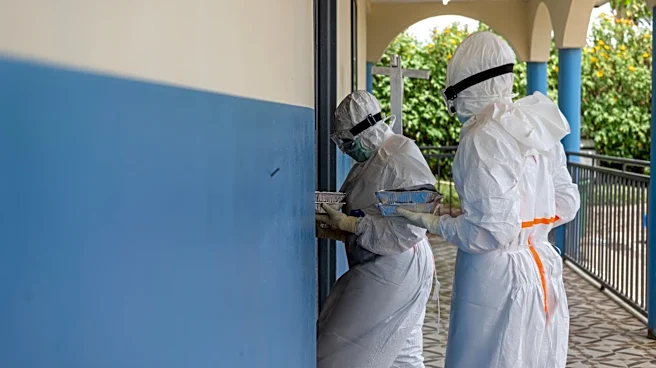
The World Health Organization (WHO) has significantly reduced the number of suspected Ebola cases in the Democratic Republic of Congo, lowering the count from over 900 to 116. Despite this reduction, 321 cases have been confirmed in the DRC, with 48 fatalities,
and nine cases in Uganda, including one death. The WHO's adjustment follows the clearance of many suspected cases as other diseases. However, front-line medics report ongoing challenges, including public skepticism about Ebola's existence and difficulties in tracking contacts of infected individuals. The outbreak, potentially spreading since January, continues to strain resources, with healthcare workers making up 20% of new cases.
Why It's Important?
The reduction in suspected cases offers a glimmer of hope in controlling the Ebola outbreak, but the situation remains precarious. The challenges faced by healthcare workers, including resource shortages and public mistrust, highlight the complexities of managing infectious disease outbreaks in regions with limited infrastructure. The outbreak's persistence underscores the need for sustained international support and effective public health strategies to prevent further spread. The situation also serves as a reminder of the global interconnectedness of health issues and the importance of robust health systems to manage such crises.
What's Next?
Efforts to control the outbreak will continue, with a focus on improving testing, treatment capacity, and public trust in healthcare workers. The WHO and other organizations are likely to increase resource allocation to affected areas to enhance protective measures for healthcare workers and improve contact tracing. Public health campaigns may be intensified to address misinformation and encourage early treatment seeking. The international community's response will be crucial in providing the necessary support to bring the outbreak under control and prevent future occurrences.