

What's Happening?
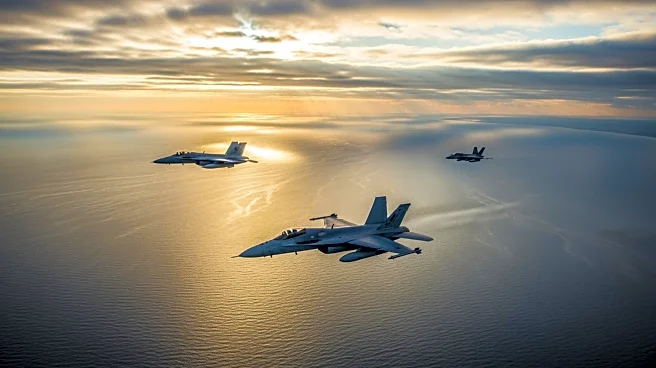
The United States has escalated its military operations in the Strait of Hormuz by deploying A-10 'Thunderbolt' aircraft and Apache helicopters to target Iranian attack boats and drones. This move is part of a broader Pentagon strategy to mitigate risks
posed by Iranian naval forces, sea mines, and cruise missiles that have been disrupting commercial shipping since early March. The Strait of Hormuz is a critical passageway for about one-fifth of the world's oil supply. U.S. officials have confirmed that these military assets have already destroyed several Iranian fast attack boats. Despite these efforts, Iran retains significant capabilities, including sea mines and hundreds of attack boats. The U.S. aims to degrade these threats sufficiently to allow safe passage for oil tankers and commercial vessels.
Why It's Important?
The U.S. military's actions in the Strait of Hormuz are crucial for maintaining global energy security, as the strait is a vital oil transit route. Disruptions in this area have already led to increased oil prices, with potential further spikes if the situation escalates. The deployment of A-10 jets, which were initially slated for retirement, underscores the urgency and seriousness of the threat. The U.S. is acting largely alone, as allies like France, Britain, and Germany have expressed support but have not committed military resources. This situation highlights the geopolitical tensions in the region and the strategic importance of the Strait of Hormuz in global energy markets.
What's Next?
The U.S. military operations are expected to continue until the threats in the Strait of Hormuz are sufficiently reduced. However, analysts warn that fully reopening the strait could take weeks. Meanwhile, European powers and Japan are considering additional measures to stabilize energy markets, including increasing oil output. The situation remains tense, with ongoing Iranian attacks on regional energy infrastructure. The international community, particularly countries reliant on oil from the region, will be closely monitoring developments and may take further diplomatic or economic actions to address the crisis.