
What's Happening?
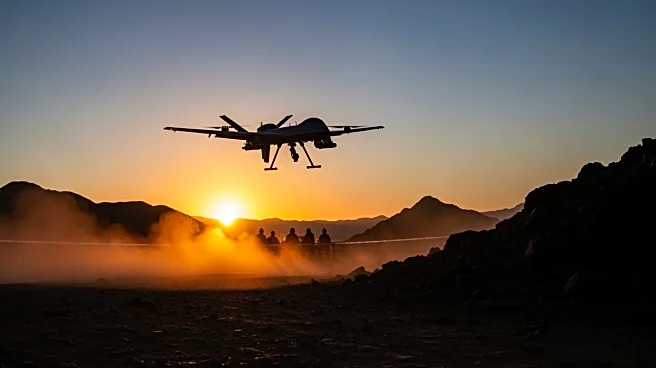
The United States military, under the direction of President Trump, has launched a series of airstrikes against Islamic State (IS) targets in Syria. This operation, known as Operation Hawkeye Strike, was
initiated in response to a deadly ambush by IS that resulted in the deaths of two U.S. soldiers and a civilian interpreter. The strikes involved over 20 aircraft, including F-15Es, A-10s, and Jordanian F-16s, and targeted more than 35 locations. The operation is part of a broader effort to combat terrorism and protect U.S. and allied forces in the region. The exact locations of the strikes and the extent of casualties remain unclear.
Why It's Important?
This military action underscores the ongoing threat posed by IS in the region and the U.S. commitment to counterterrorism efforts. The strikes are a significant demonstration of military capability and resolve, aimed at deterring future attacks against U.S. forces. The operation also highlights the strategic partnerships between the U.S. and regional allies, such as Jordan, in combating terrorism. The success of these strikes could impact the operational capabilities of IS and contribute to regional stability. However, the potential for civilian casualties and the broader geopolitical implications of U.S. military actions in Syria remain areas of concern.
What's Next?
The U.S. military is likely to continue its operations against IS as part of its broader strategy to eliminate terrorist threats. The international community will be watching closely to see how these actions affect the dynamics in Syria, particularly in relation to the ongoing conflict and power struggles in the region. The U.S. may also face diplomatic challenges in balancing its military objectives with humanitarian concerns and the interests of other regional powers.