






What's Happening?
The U.S. Federal Aviation Administration (FAA) is undertaking a significant modernization effort to replace decades-old technology, including the use of floppy disks, in its air traffic control operations. This transition aims to eliminate outdated information
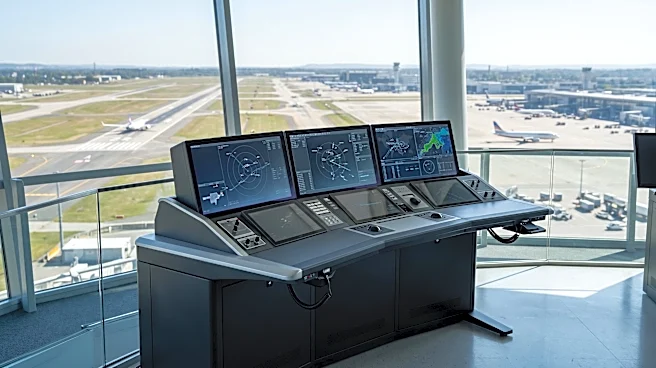
systems across more than 400 facilities nationwide, with completion targeted by the end of 2028. The FAA will introduce the Enterprise Information Display System, which will consolidate four separate platforms from the 1980s into a single interface. This new system will provide controllers with instant access to critical operational information, such as weather data, flight alerts, and restricted airspace schedules, reducing reliance on older equipment and disconnected systems. FAA Administrator Bryan Bedford stated that the agency is moving away from manual processes and technology that once relied on floppy disks to improve how important information reaches personnel. This initiative follows repeated technical failures and concerns about the reliability of America's air traffic management network, including incidents caused by communication failures and reliance on aging hardware.
Why It's Important?
The modernization of the FAA's air traffic control systems is critically important for national aviation safety and efficiency. The continued reliance on outdated technology, such as floppy disks and analog computing equipment, has led to repeated disruptions and exposed vulnerabilities in the air traffic management network. These failures can cause significant flight delays, economic losses for airlines and businesses, and inconvenience for millions of travelers. By upgrading to a 21st-century system, the FAA aims to enhance the reliability and resilience of its operations, reducing the risk of system outages and improving the flow of air traffic. This move will also streamline communication among controllers and improve their ability to manage aircraft movements effectively, ultimately contributing to safer skies and a more robust national transportation infrastructure. The investment reflects a recognition of the critical need to align aviation technology with modern standards to prevent future operational challenges.
What's Next?
The FAA plans to complete the transition to the new Enterprise Information Display System by the end of 2028, phasing out floppy disks and other outdated technologies across its more than 400 facilities. This will involve the deployment of new hardware and software, as well as training for air traffic controllers on the updated systems. Congress has already approved $12.5 billion for air traffic technology improvements, and U.S. Transportation Secretary Sean Duffy has requested an additional $30 billion to support further modernization efforts. The agency will also continue its ongoing transition away from paper flight strips, with completion scheduled for 2028. These efforts will require sustained funding and coordinated implementation to ensure a smooth and effective upgrade of the national air traffic management system.
Beyond the Headlines
The FAA's modernization effort highlights a broader challenge faced by many critical infrastructure sectors in the U.S.: the need to update aging technology. The continued use of floppy disks and other legacy systems in air traffic control underscores the difficulty and expense involved in overhauling complex, mission-critical infrastructure. This situation also raises questions about cybersecurity vulnerabilities associated with outdated systems, as older technology may be more susceptible to modern threats. The move towards integrated digital platforms not only improves operational efficiency but also enhances data security and resilience. Furthermore, the FAA's experience serves as a case study for other government agencies and industries grappling with the balance between maintaining operational continuity and investing in necessary technological advancements to meet contemporary demands and ensure future reliability.