








What's Happening?
The New World Screwworm, a parasitic fly, has been reported in Texas and New Mexico, prompting concerns among Missouri officials about its potential spread to the state. The larvae of this fly can cause severe wounds and infections in warm-blooded animals,
including livestock. Although no cases have been reported in Missouri, the state is on high alert due to the economic impact such an outbreak could have, similar to a past outbreak in Texas that cost the economy $1.8 billion. The Centers for Disease Control and Prevention has activated a Level 3 emergency response, the lowest level, to address the situation. Missouri's state veterinarian, Steve Strubberg, emphasizes the importance of early detection and biosecurity measures to prevent the screwworm's arrival.
Why It's Important?
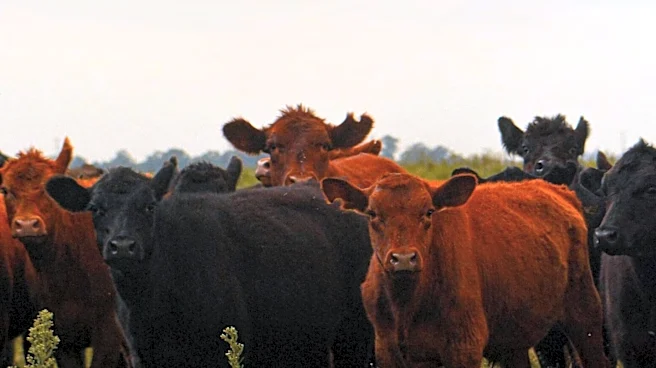
The potential spread of the New World Screwworm to Missouri poses a significant threat to the state's livestock industry, which includes the sixth largest cattle inventory in the U.S. An outbreak could lead to increased operational costs for ranchers due to heightened monitoring and treatment requirements. Additionally, the closure of the Mexican border for livestock imports, due to screwworm detections, has already contributed to a shortage of cattle in the U.S., exacerbating the rise in beef prices. The USDA reports a 12.9% increase in beef prices over the past year, partly due to a declining cattle inventory. The screwworm's presence could further strain the supply chain, impacting beef prices and availability.
What's Next?
Missouri has activated its New World Screwworm Response Plan, which includes movement restrictions and inspection requirements for animals entering from infested areas. The USDA has allocated $105 million for projects aimed at detection, control, and eradication of the screwworm. Missouri officials are advising ranchers to implement preventive measures, such as cleaning and covering wounds and delaying practices that cause open wounds. The screwworm's inability to survive in cold weather provides some relief, as it cannot establish a year-round presence in Missouri. However, vigilance is required during warmer months when the fly could migrate north.