





What's Happening?
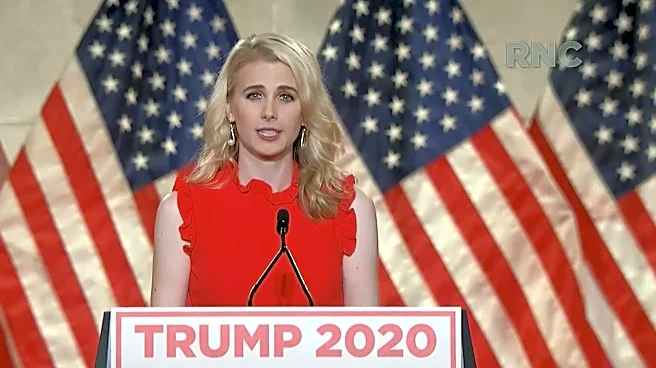
Natalie Harp, President Trump’s 35-year-old executive assistant, reportedly worked for over a year without obtaining the routine security clearance typically required for West Wing staffers, according to MS NOW. This revelation, citing two people familiar
with the matter, caused alarm among the Secret Service, the White House counsel’s office, and security officials due to her unfettered access to the president and sensitive information. President Trump eventually intervened personally, and Harp completed the necessary forms for a federal background investigation and received her clearance 'in recent months.' Harp, a former host at One America News, has become one of President Trump’s closest aides, serving as a gatekeeper to the president. White House Press Secretary Karoline Leavitt defended Harp, stating she has a security clearance and is a loyal team member.
Why It's Important?
This situation is highly significant as it raises serious national security concerns regarding access to classified information and the integrity of White House security protocols. An aide with direct access to the President and sensitive information operating without a full security clearance for an extended period could pose a vulnerability to national security. It also highlights potential issues with the enforcement of security procedures within the White House and the influence of presidential intervention in such processes. The incident could undermine public confidence in the administration's ability to safeguard sensitive information and manage personnel effectively, especially given President Trump's previous controversies regarding security clearances during his first term.
What's Next?
While Natalie Harp has now reportedly received her security clearance, the revelation of her operating without one for over a year may prompt further scrutiny from Congress or oversight bodies. There could be calls for investigations into how such a lapse occurred and why it persisted for so long, potentially leading to reforms in White House security clearance procedures. The incident may also intensify public and media focus on the roles and access levels of presidential aides, particularly those without traditional government backgrounds. The White House may face continued questions regarding the transparency and adherence to security protocols for all staff members with access to sensitive information.
Beyond the Headlines
This incident delves into the deeper implications of presidential power and the potential for bypassing established protocols within the executive branch. The fact that President Trump personally intervened to address Harp's security clearance issue suggests a dynamic where personal loyalty might, at times, supersede standard bureaucratic procedures. This raises ethical questions about the balance between a president's prerogative to choose their staff and the critical need for robust national security safeguards. It also highlights the ongoing tension between political appointments and the professional standards of intelligence and security agencies. The episode could contribute to a broader debate about the checks and balances necessary to ensure national security is not compromised by internal White House dynamics.