




What's Happening?
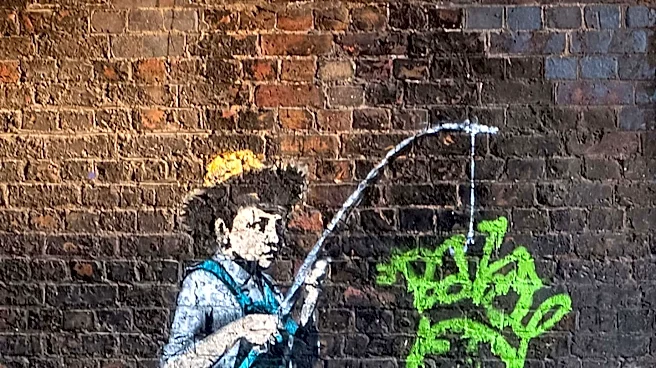
Three artworks by the renowned street artist Banksy have incurred significant costs for UK taxpayers, totaling nearly £150,000. The expenses are primarily due to cleaning operations and security measures. The most substantial cost is associated with a mural
painted on the Royal Courts of Justice in September 2025, which alone has required over £85,000 for removal efforts and security. The Ministry of Justice (MoJ) has disclosed that £50,000 was spent on removing paint from the Grade II-listed building's wall on Carey Street, with an additional £35,300 allocated for overtime and security. These figures were obtained through Freedom of Information requests and have sparked renewed debate over the classification of Banksy's work as either vandalism or valuable public art.
Why It's Important?
The financial burden of maintaining Banksy's artworks highlights the ongoing debate about the value and impact of street art. While some view Banksy's pieces as cultural treasures that enhance public spaces, others see them as acts of vandalism that impose unnecessary costs on taxpayers. The significant expenditure on cleaning and security underscores the challenges faced by public institutions in managing and preserving street art. This situation raises questions about the allocation of public funds and the prioritization of cultural preservation versus fiscal responsibility. The debate also touches on broader issues of artistic freedom and the role of art in public spaces.
What's Next?
As the costs associated with Banksy's artworks continue to rise, public and governmental discussions are likely to intensify regarding the management of street art. Potential outcomes could include the development of new policies or guidelines for handling such artworks, balancing the need for preservation with fiscal constraints. Stakeholders, including cultural institutions, government bodies, and the public, may engage in dialogue to determine the best approach to managing street art in a way that respects both artistic expression and public resources.
Beyond the Headlines
The situation with Banksy's artworks also reflects broader cultural and ethical considerations. It raises questions about the ownership and commodification of art, especially when it is created in public spaces. The debate over whether Banksy's work should be preserved or removed touches on issues of cultural heritage and the value society places on different forms of artistic expression. Additionally, the financial implications for taxpayers highlight the need for a nuanced approach to public art that considers both its cultural significance and economic impact.