






What's Happening?
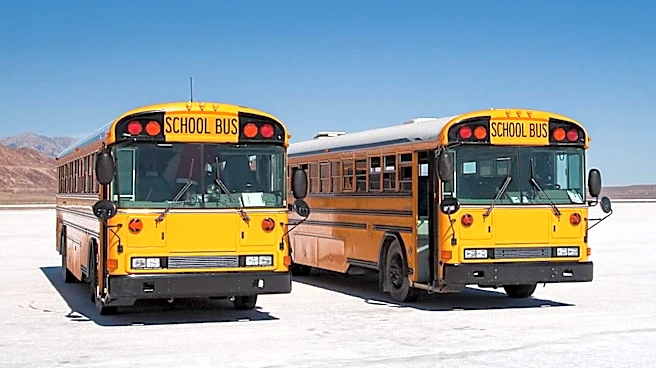
The Pennsylvania Supreme Court has issued a ruling that permits school districts to cease providing traditional yellow bus transportation for charter school students, provided they offer alternative free transportation methods. This decision stems from
a 2018 lawsuit involving Allegheny County's Propel Schools and the Wilkinsburg School District, which had switched charter students from school buses to free bus passes. The court clarified that the state law requiring transportation 'under the same conditions' for charter schools does not mandate identical modes of transport. Consequently, districts like Woodland Hills School District and Whitehall-Coplay School District have begun issuing public transit passes, such as Pittsburgh Regional Transit cards or Lehigh and Northampton Transportation Authority passes, to charter students instead of traditional bus services. This shift is occurring as charter school enrollment in Pennsylvania has seen significant growth since the COVID-19 pandemic, increasing from 140,000 in 2019 to over 174,000 last school year.
Why It's Important?
This ruling has significant implications for both school districts and charter school families across Pennsylvania. For school districts, it offers a potential solution to rising transportation costs and ongoing shortages of qualified bus drivers, which the Pennsylvania School Boards Association identifies as a 'significant responsibility and expense.' The use of public transit is generally cheaper, and in some cases, fully reimbursable by the state, unlike school bus services. However, charter school advocates argue that this change creates inequities, particularly for younger students and those in rural or suburban areas where public transit infrastructure may be inadequate, leading to longer commute times and safety concerns. They also suggest that districts might leverage this ruling to pressure parents to keep children in traditional public schools. The debate highlights the financial strain on public school systems and the growing tension between traditional public schools and charter schools over resource allocation and student services.
What's Next?
The issue is far from settled, as Republican lawmakers in Harrisburg are actively backing measures to effectively overturn parts of the Supreme Court's ruling. These legislative efforts aim to require schools to provide charter students, especially those in kindergarten through eighth grade, with transportation 'under the same terms and conditions, including mode of transportation,' as traditional students. Charter school advocates are also exploring further legal options, including challenging the constitutionality of the law, if legislative efforts do not succeed. Additionally, the ruling has brought to light broader issues regarding how Pennsylvania funds school transportation, with some lawmakers pointing to outdated state laws that hinder efficiency, such as requiring print logs for mileage instead of digital methods. The ongoing debate is expected to continue in the state Capitol, potentially leading to further legislative action or legal challenges.
Beyond the Headlines
The Supreme Court's decision delves into the interpretation of 'same conditions' in state law, revealing a deeper legal and philosophical debate about equity in education. While the court ruled that 'same conditions' does not mean 'identical transportation,' charter school advocates argue that providing different modes of transport for charter students, especially young children, is discriminatory and creates an 'inequity.' This raises questions about the state's responsibility to ensure equal access to education, not just in terms of schooling itself, but also in the supporting services like transportation. The shift to public transit also brings ethical considerations regarding the safety and well-being of young children navigating public transportation, particularly in areas with limited infrastructure. This development could trigger long-term shifts in how school transportation is funded and managed across the state, potentially leading to a re-evaluation of existing laws and policies to better address the evolving landscape of public and charter education.