






What's Happening?
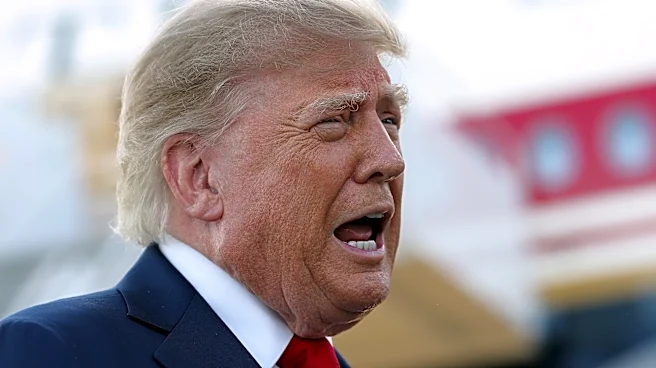
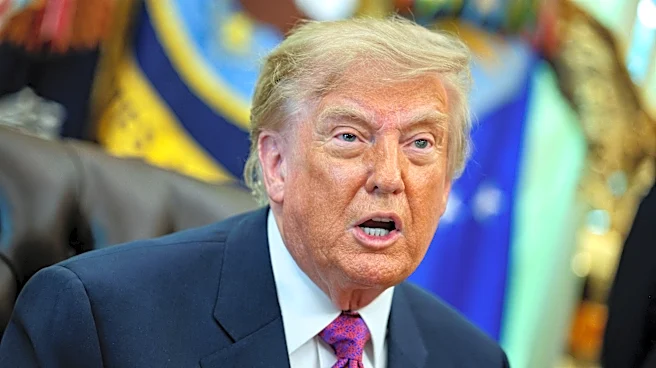
The Trump Administration has launched America.gov, an AI-powered government website promoted as a new digital front door for federal services. President Trump spoke at the launch event, emphasizing the site's goal to simplify Americans' access to information
and services scattered across various agency websites. The platform utilizes artificial intelligence to answer questions about government services, though it does not disclose the specific AI model used, stating it searches official government sources and provides explanations with citations. America.gov is designed to be free, ad-free, and requires no login. Notably, upon its initial launch, the site's question-and-answer function provided factual answers that contradicted some of President Trump's frequent claims, such as confirming that Joe Biden won the 2020 election and that Barack Obama's 2009 inauguration had a larger crowd than Trump's in 2017. However, within moments of launch, the site began modifying its answers, subsequently refusing to answer political inquiries or offering more muddled responses on politically sensitive topics.
Why It's Important?
The launch of America.gov is a significant step in the modernization of federal government services, aiming to streamline access for millions of Americans. The use of AI in a public-facing government portal has the potential to dramatically improve efficiency and user experience, making government more accessible and responsive. However, the immediate controversy surrounding the AI chatbot's initial factual responses and subsequent modifications highlights critical issues regarding the neutrality, accuracy, and potential political influence on AI systems in government. The site's initial ability to contradict presidential claims and its rapid adjustment raise concerns about censorship, algorithmic bias, and the integrity of information provided by government-backed AI. This situation underscores the challenges of deploying advanced technology in politically charged environments and the importance of maintaining objective, verifiable information in public services. The incident could impact public trust in AI-driven government initiatives and spark broader debates about the ethical guidelines for AI in public service.
What's Next?
The Trump Administration will likely continue to promote America.gov as a tool for government efficiency and transparency. However, the controversy surrounding the AI's initial responses and subsequent changes will likely lead to increased scrutiny from the public, media, and potentially Congress regarding the site's editorial control and the independence of its AI. The administration may need to clarify its policies on how the AI is trained, what sources it uses, and how it handles politically sensitive questions to rebuild trust. Future developments could include further refinement of the AI's capabilities, expansion of integrated services, and ongoing efforts to ensure the platform remains a reliable source of information. The incident also sets a precedent for how AI-powered government services might navigate political pressures and the imperative for factual accuracy, influencing the design and implementation of similar initiatives in the future.
Beyond the Headlines
The America.gov launch and its immediate controversy delve into the deeper implications of artificial intelligence in governance and the nature of truth in the digital age. The fact that a government-backed AI initially provided information contradicting the President's claims, only to have those responses altered, raises fundamental questions about the role of AI as an objective information source versus a tool that can be influenced by political agendas. This incident highlights the potential for AI to either enhance transparency or become a mechanism for information control. It also underscores the challenge of maintaining public trust when technology designed for objectivity appears to yield to political pressure. The long-term impact could be a re-evaluation of how AI is integrated into public services, with a greater emphasis on transparency in AI development, independent auditing of AI outputs, and robust ethical frameworks to prevent manipulation. This event serves as a critical case study in the evolving relationship between technology, government, and public discourse.