


What's Happening?
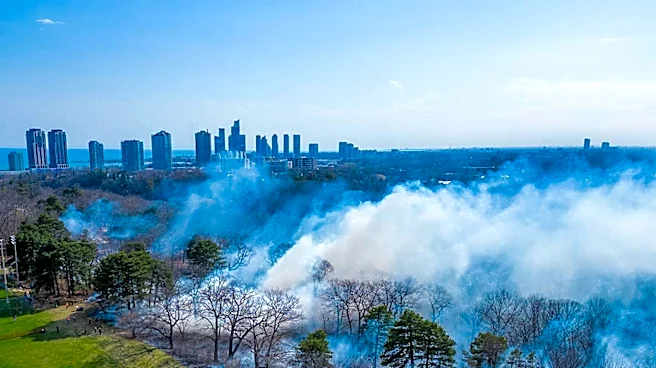
A new report by St. John's Community Health and other organizations indicates that residents and workers near a Boyle Heights warehouse, which experienced a massive fire two months ago, face severe and worsening health risks. The fire at the Lineage Logistics
facility burned for over a week, leaving an estimated 85 million pounds of rotting food. Residents have reported foul odors, and the report, released on Tuesday, claims that the decaying food and toxins have sickened many in surrounding neighborhoods. Jim Mangia, president and CEO of St. John's Community Health, stated that over 1,300 people were treated, with nearly 40% experiencing serious health problems, including acute upper respiratory infections, eye disorders, and asthma exacerbation. The report also highlights an increase in mental health issues such as anxiety and sleep disruption. While Lineage Logistics claims to have removed about 95% of the bulk food waste, community leaders are demanding the company accelerate cleanup and not rebuild in the area.
Why It's Important?
This situation highlights significant public health and environmental justice concerns within U.S. urban communities. The alleged health impacts, ranging from respiratory issues to mental health problems, underscore the vulnerability of residents living near industrial sites, particularly after environmental disasters. The community's demand for Lineage Logistics not to rebuild reflects a broader sentiment against industries perceived as endangering public health and safety. The involvement of Los Angeles Mayor Karen Bass, who has frozen permits and is considering a lawsuit, indicates the high-level political attention this issue is receiving. This event could set precedents for corporate accountability in disaster response and long-term community health impacts, potentially influencing future regulations on industrial waste management and urban planning in densely populated areas.
What's Next?
Lineage Logistics expects to complete the food waste removal in the coming days, though the final cleanup phase is described as the 'most complex.' Community leaders in Boyle Heights are advocating for Lineage to accelerate its cleanup efforts and are strongly opposing any plans for the company to rebuild its facility in the neighborhood. Los Angeles Mayor Karen Bass has taken action by freezing any permits for rebuilding and has city attorneys drafting a potential lawsuit against Lineage. Additionally, federal disaster assistance, in the form of low-interest loans up to $2 million, has been made available through the U.S. Small Business Administration (SBA) for small businesses and non-profits in the area that have suffered economic losses due to the fire. The deadline to apply for these loans is May 14, 2027, with SBA customer service available at two Los Angeles Business Recovery Centers.
Beyond the Headlines
The Boyle Heights warehouse fire exposes deeper issues concerning environmental equity and corporate responsibility in urban settings. The long-term health consequences, as predicted by health officials, could lead to a chronic public health crisis in the community, potentially increasing healthcare burdens and reducing quality of life for residents. The community's strong opposition to Lineage rebuilding raises questions about the balance between economic development and community well-being, and whether corporations should be allowed to resume operations after causing significant environmental and health damage. This incident could fuel broader discussions on zoning laws, industrial site regulations, and the rights of communities to influence development decisions that directly impact their health and environment. It also highlights the critical role of community health organizations in advocating for affected populations and documenting health impacts.