








What's Happening?
North Korea launched several missiles towards the East Sea on November 4, according to South Korea’s Joint Chiefs of Staff. The missiles, fired from the Sondok area, traveled less than 300 kilometers. This launch occurred amidst renewed tensions with
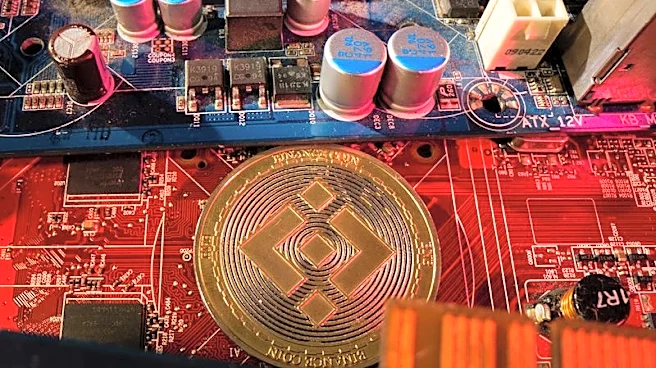
the United States, following accusations that North Korean hackers were responsible for stealing over $6 billion from Binance, the world’s largest cryptocurrency exchange. The FBI attributed the theft to North Korean cyber actors known as TraderTraitor, an accusation Pyongyang has denied. Kim Yo Jong, sister of North Korean leader Kim Jong Un, stated that dialogue with the U.S. remains an option but is not necessary for North Korea’s interests under current circumstances. This missile launch is part of a series of weapons tests conducted by North Korea in recent weeks.
Why It's Important?
North Korea's missile launches, coupled with the cyber theft accusations, significantly heighten tensions with the United States and its allies. The alleged $6 billion cryptocurrency heist, if confirmed, represents a substantial illicit funding source for North Korea's weapons programs, directly undermining international sanctions aimed at curbing its nuclear ambitions. This financial activity poses a direct threat to U.S. economic security and the integrity of global financial systems. The missile launches serve as a defiant response to these accusations and a demonstration of North Korea's continued military development, challenging U.S. efforts to denuclearize the Korean Peninsula. The U.S. must now contend with both conventional military threats and sophisticated cyber warfare from North Korea, complicating its strategic response and requiring a multi-faceted approach to security.
What's Next?
South Korea and U.S. authorities are currently analyzing the specifications of the latest missiles. This analysis will inform future defense strategies and intelligence assessments. The U.S. is likely to continue to press for international cooperation to combat North Korea's cyber activities and enforce sanctions more rigorously. Further missile tests from North Korea are anticipated as it continues to develop its weapons programs. Diplomatic channels, while currently strained, may eventually be sought to de-escalate tensions, though North Korea's current stance suggests a reluctance for immediate dialogue without significant concessions. The U.S. will likely reinforce its commitment to regional allies and maintain a strong military presence to deter further provocations.
Beyond the Headlines
The intersection of North Korea's missile program and its alleged cyber theft operations reveals a sophisticated and evolving threat model. The use of cybercrime to fund illicit weapons development represents a significant challenge to traditional national security frameworks. This strategy allows North Korea to circumvent conventional economic sanctions, making it harder for the international community to cut off its funding sources. The implications extend to the global cryptocurrency market, raising questions about its vulnerability to state-sponsored hacking and the need for enhanced security protocols and regulatory oversight. This situation also highlights the ethical dilemma of how to respond to a state that uses criminal means to achieve strategic objectives, blurring the lines between national security and international law enforcement. The long-term impact could be a re-evaluation of how nations define and counter state-sponsored cyber warfare and financial crime.