



What's Happening?
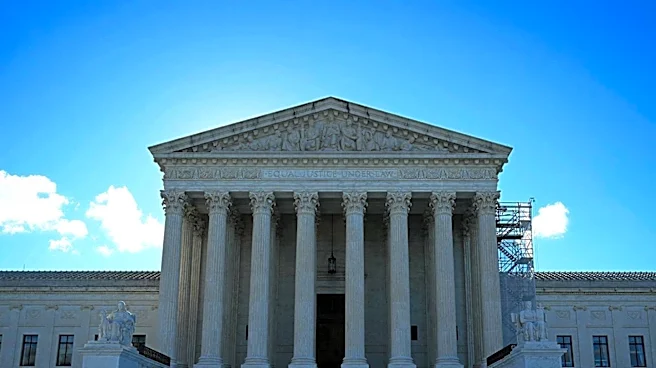
A federal court has affirmed the constitutionality of 18 U.S.C. § 922(g)(4), which prohibits individuals adjudicated as mentally defective or committed to a mental institution from possessing firearms. The ruling came in the case of Alexander Laykovich,
who pleaded guilty to violating this provision after being stopped in full body armor with multiple firearms on his way to Fort Knox. Laykovich had been committed by a state court due to mental illness posing a serious public-safety risk. He challenged the provision as facially unconstitutional under the Second Amendment. However, the court referenced historical English traditions of forcibly detaining individuals whose mental illness made them a danger to public safety, noting that Section 922(g)(4) serves a similar public-safety purpose and applies only until the individual no longer poses a threat. The court concluded that Laykovich's facial challenge under the Second Amendment lacked merit and also dismissed his separate sentencing claims.
Why It's Important?
This ruling reinforces the federal government's ability to restrict firearm access for individuals deemed a public safety risk due to mental illness. It underscores the judiciary's interpretation of the Second Amendment, balancing individual gun rights with public safety concerns, particularly in cases involving mental health. The decision could influence future legal challenges to similar firearm restrictions and may impact how mental health commitments are considered in the context of gun ownership. For public safety advocates, the ruling is a significant affirmation of existing laws designed to prevent gun violence. Conversely, Second Amendment proponents may view this as a limitation on gun rights, potentially leading to further legal and political debate regarding the scope of firearm regulations for those with mental health histories.
What's Next?
The affirmation of this federal law suggests that similar challenges to firearm prohibitions for individuals with mental health commitments are likely to face an uphill battle in federal courts. This ruling could encourage states to review and potentially strengthen their own laws regarding mental health and firearm possession, aligning with federal standards. Advocacy groups on both sides of the gun control debate will likely continue to monitor and engage with legal developments in this area, potentially leading to further legislative efforts or legal challenges aimed at either expanding or restricting such prohibitions. The case may also prompt discussions on the criteria and processes for adjudicating individuals as mentally defective or committing them to mental institutions, given the direct impact on their Second Amendment rights.
Beyond the Headlines
The case highlights the complex intersection of mental health, individual rights, and public safety in the United States. It brings to the forefront the societal challenge of identifying and managing individuals who pose a risk due to mental illness while respecting their constitutional freedoms. The historical context cited by the court, referencing 18th-century English traditions, underscores the long-standing tension between individual liberties and collective security. This ruling could also spark broader conversations about the adequacy of mental healthcare systems and the resources available for individuals with serious mental illnesses, as well as the potential for stigma associated with mental health diagnoses when linked to firearm restrictions. The decision implicitly supports the idea that certain mental health conditions can be a legitimate basis for limiting constitutional rights when public safety is at stake.