







What's Happening?
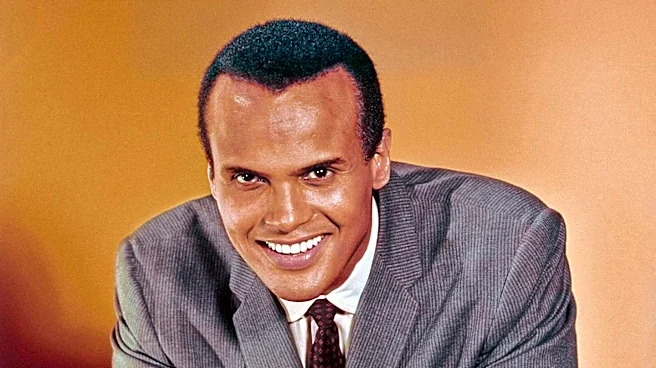
A new biography titled 'Daylight Come' by Joshua Jelly-Schapiro delves into the lifelong affinity of the late singer, actor, and activist Harry Belafonte for Jewish culture. The book highlights how Belafonte, known for popularizing 'The Banana Boat Song,'
also brought the Jewish folk song 'Hava Nagila' to global recognition after learning it from a local cantor. Belafonte's connection to Jewish traditions was a significant part of his life, influenced by his upbringing in New York amidst Jewish communities and his understanding of the Holocaust. He incorporated Jewish songs like 'Hava Nagila' and 'Hinei Ma Tov' into his repertoire, performing them in places like Berlin in 1958, shortly after World War II, conveying Jewish humanity and culture to German audiences. The biography also touches on his father's unverified claim of Dutch Jewish ancestry from Martinique and his close relationships with Jewish individuals and causes throughout his career.
Why It's Important?
This biography is important as it sheds light on a lesser-known but significant aspect of Harry Belafonte's life and career: his profound engagement with Jewish culture and his role in bridging cultural divides. His popularization of 'Hava Nagila' introduced Jewish folk music to a broader American and international audience, demonstrating the power of cultural exchange through music. Furthermore, the book underscores the historical and political alliances between Black and Jewish communities in the U.S., particularly during the Civil Rights Movement. Belafonte's apartment served as a New York headquarters for Martin Luther King Jr., and he mobilized support for the 1963 March on Washington, often collaborating with Jewish allies. This narrative enriches the understanding of American cultural history, highlighting how diverse communities influenced and supported each other in shaping the nation's social and political landscape. It also provides context for the complex relationship between Black and Jewish communities, which has evolved over time.
What's Next?
The release of 'Daylight Come' is expected to generate renewed interest in Harry Belafonte's legacy, particularly his cultural and political contributions beyond his musical and acting career. The biography's exploration of his Jewish connections may spark further discussions and research into the intertwined histories of Black and Jewish communities in the U.S. It could also lead to a re-evaluation of his artistic choices and political stances, especially concerning his later critiques of Israeli policy, as mentioned in the book. The book's insights into Belafonte's efforts to integrate the entertainment industry by hiring interns of color and collaborating with blacklisted artists like Zero Mostel might inspire contemporary conversations about diversity and inclusion in media. The American Jewish Historical Society's ongoing exhibit, which includes Belafonte, suggests a continued effort to recognize and celebrate his multifaceted impact on American history and culture.
Beyond the Headlines
Beyond the immediate narrative of Belafonte's life, this biography touches upon deeper implications regarding cultural identity, historical memory, and the evolution of political thought. Belafonte's journey from popularizing Caribbean folk music to embracing Jewish melodies exemplifies the fluidity and interconnectedness of cultural expressions. His personal and professional alliances with Jewish individuals and his engagement with Jewish culture highlight a historical period where cross-cultural solidarity was a powerful force for social change. The book also subtly addresses the complexities of identity, as seen in the unverified family story of his Dutch Jewish ancestry, and his own statement about understanding different cultures. His later critiques of U.S. foreign policy and Israeli actions, while not fully detailed in the source, suggest a nuanced political evolution that reflects broader shifts within progressive movements regarding international relations and human rights. This offers a lens through which to examine how public figures navigate evolving political landscapes and maintain their core values.