







What's Happening?
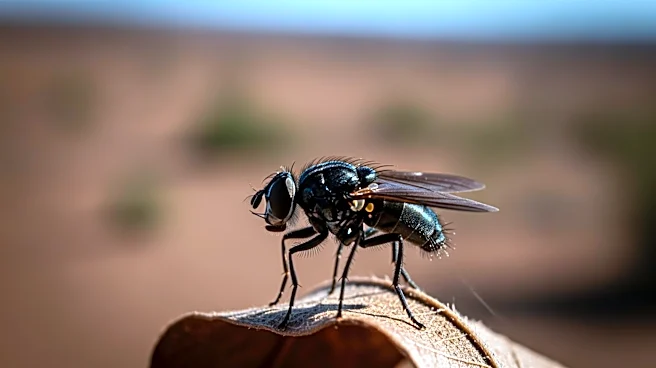
The New World screwworm, a flesh-eating parasitic fly once eradicated from the United States, has been detected near the Texas-Mexico border. The U.S. Department of Agriculture reported active cases in Nuevo León, Mexico, with the closest case being 62
miles from the U.S. border. The screwworm poses a threat to livestock as it feeds on warm-blooded animals, creating painful wounds. The USDA has closed southern ports of entry to livestock trade to prevent the spread. Although there is no current risk to U.S. livestock or humans, the situation is being closely monitored.
Why It's Important?
The re-emergence of the New World screwworm near the U.S. border is significant due to its potential impact on the cattle industry, particularly in Texas, which has the largest cattle industry in the nation. The fly's return could lead to substantial economic losses, potentially running into billions of dollars. The situation underscores the importance of biosecurity measures and the need for vigilance in monitoring and controlling the spread of such pests. The USDA's proactive measures aim to protect the U.S. livestock industry from potential outbreaks.
What's Next?
U.S. authorities will continue to monitor the situation closely, with the USDA and other agencies likely to implement further preventive measures if necessary. The closure of livestock trade ports is a temporary measure, and its duration will depend on the containment of the screwworm cases in Mexico. The situation may prompt discussions on enhancing cross-border cooperation to address the threat. Additionally, research into the effects of climate change on the spread of such pests may be prioritized to develop long-term strategies for prevention.