




What's Happening?
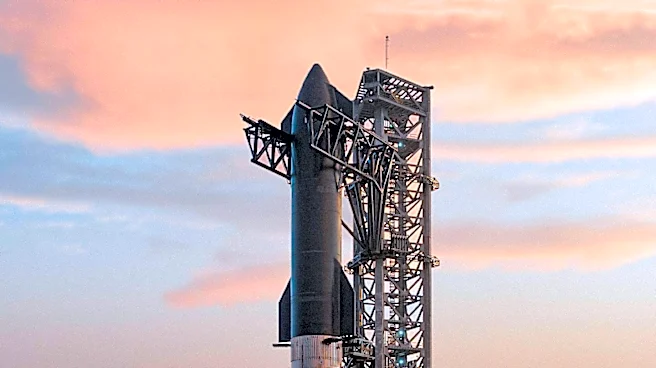
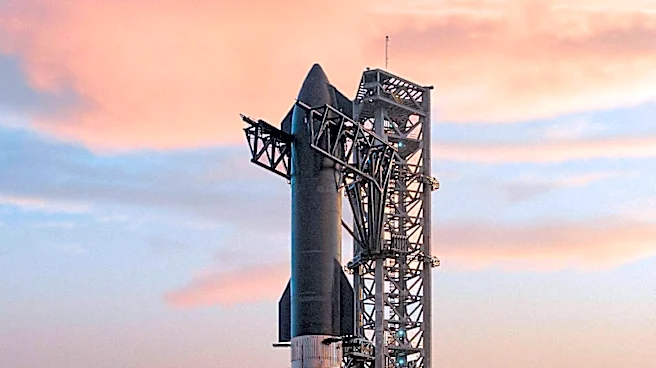
The exact number of SpaceX Starship launches required to land American astronauts on the Moon for NASA's Artemis program remains unconfirmed by official sources. While NASA has selected SpaceX to develop the Starship Human Landing System (HLS) and its
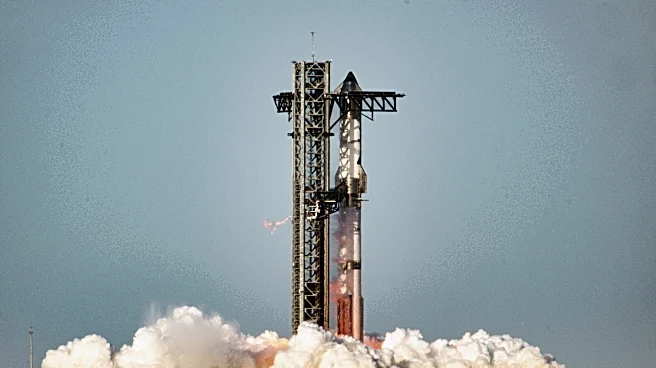
architecture relies on orbital refueling, neither NASA nor SpaceX has published a definitive launch count. The plan involves tanker Starships supplying an orbital propellant storage Starship, which then refuels the human-rated Starship HLS before it proceeds to lunar orbit. This complex refueling process is central to the mission's feasibility, as a single Starship launch cannot carry enough fuel for a full lunar mission. Media analyses from Space.com, Texas Standard, and Shattered.io highlight that key program parameters, including the launch count and the simplicity of the refueling plan, are still publicly uncertain. The widely cited '6-8' launch figure is attributed to Elon Musk in secondary reporting but is not an official NASA or SpaceX requirement.
Why It's Important?
The lack of a confirmed launch count for Starship's lunar missions has significant implications for NASA's Artemis program, affecting cost, schedule, and risk assessments. Each additional tanker flight necessitates more Super Heavy boosters, Raptor engines, and pad turnarounds, directly impacting the overall budget and timeline. The uncertainty also affects hardware watchers and aerospace suppliers, as a loose estimate of six versus forty launches represents a vast difference in production load and sustained demand. For investors and suppliers in the aerospace market, the unknown launch count creates pricing and capacity questions. A small number of tanker flights would make Starship's lunar role seem like a one-off, while a large number would signify a sustained production effort. The success of the orbital refueling demonstration is critical, as it will provide real-world data on transfer efficiency, boil-off rates, and overall operational complexity, which are currently unknown variables influencing the final launch count.
What's Next?
The next critical steps involve SpaceX and NASA conducting a successful orbital refueling demonstration. This demonstration, involving a propellant storage depot and tanker Starships, is expected to provide crucial data on transfer efficiency, cryogenic propellant boil-off rates, and the feasibility of repeated booster reuse. Until these tests are completed and official figures are published, the launch count will remain speculative. NASA and SpaceX are expected to release a binding number of tanker flights only after measuring real transfer efficiency and validating the entire refueling process. The re-sequencing of Artemis missions, with SpaceX now supporting a second human-landing demonstration under Artemis IV, suggests that early tests will inform the final plan. The aerospace community will be closely watching for official announcements regarding transfer efficiency, long-duration propellant storage, and a definitive launch count with stated margins.
Beyond the Headlines
The reliance on orbital refueling for the Artemis program represents a fundamental shift from the Apollo era's single-launch approach, introducing new operational complexities and technological challenges. While Apollo used one enormous rocket per mission, Artemis combines a government-built crew launch with a commercial lander requiring a chain of refueling flights, aiming for a reusable system for repeated lunar trips. This approach, while potentially more cost-effective in the long run, introduces the unprecedented challenge of large-scale propellant transfer in orbit. The success of this endeavor could unlock new possibilities for deep-space exploration and resource utilization, making missions to Mars and beyond more feasible. However, the inherent complexities of cryogenic fuel management in microgravity, repeated rendezvous and docking with large vehicles, and the need for rapid launch cadences pose significant engineering hurdles. The outcome of these challenges will not only shape the future of lunar exploration but also influence the broader commercial space industry's ability to support ambitious orbital and interplanetary ventures.