
What's Happening?
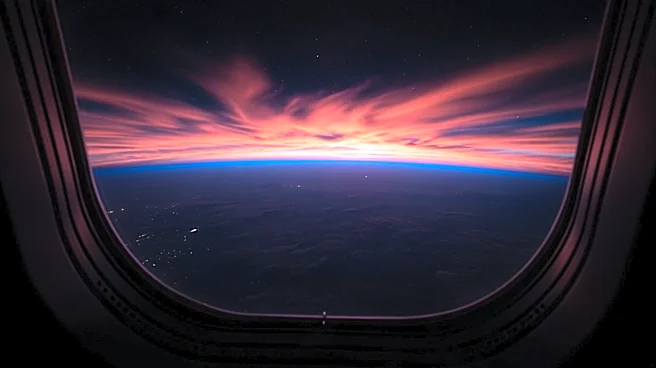
An astronaut aboard the International Space Station (ISS) captured a striking image of a fiery object streaking across Earth's atmosphere on April 27, 2026. The photograph was taken as the ISS passed over
West Africa, and the astronaut initially intended to observe the Progress 95 cargo craft. Instead, they witnessed a bright object breaking apart in the upper atmosphere, creating a spectacular light show. The event was not related to the Progress 95, which docked safely as planned. The fiery display could have been caused by the reentry and breakup of a rocket, satellite, or other space debris, or possibly by meteoric material burning up. NASA's Orbital Debris Program Office notes that most large orbital debris originates from fragmented satellites and launch vehicles, orbiting at speeds of approximately 25,000 kilometers per hour.
Why It's Important?
This event highlights the ongoing issue of space debris, which poses a risk to both space missions and the safety of astronauts. The presence of tens of thousands of trackable objects in Earth's orbit underscores the need for effective debris management and mitigation strategies. As space exploration and satellite launches increase, the potential for collisions and the creation of additional debris grows, threatening the sustainability of space activities. Understanding and monitoring these events are crucial for developing policies to protect both current and future space operations. The incident also serves as a reminder of the dynamic and sometimes unpredictable nature of Earth's atmosphere and the space environment.
What's Next?
Efforts to address space debris are likely to intensify, with increased focus on developing technologies for debris removal and improved tracking systems. International collaboration may be necessary to establish comprehensive guidelines and agreements for debris management. Space agencies and private companies will need to prioritize sustainable practices in satellite design and launch operations to minimize the creation of new debris. Additionally, continued observation and research will be essential to better understand the behavior of debris and meteoric material in Earth's atmosphere.
Beyond the Headlines
The event captured by the astronaut also raises questions about the long-term impact of space debris on Earth's environment and the potential for future incidents. As debris reenters the atmosphere, it can create hazardous conditions for both space missions and terrestrial activities. The need for ethical considerations in space exploration, including the responsibility to minimize environmental impact, is becoming increasingly important. This incident may prompt discussions on the balance between technological advancement and environmental stewardship in space exploration.