
What's Happening?
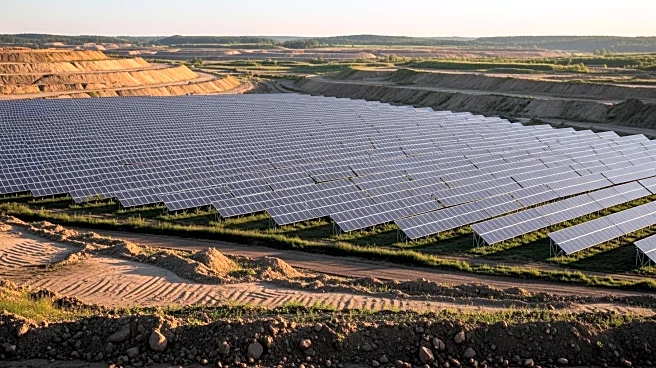
A recent study has revealed the benefits of deploying photovoltaic (PV) systems in coal-mining subsidence areas, particularly in Shanxi Province, China. The research utilized the fuzzy DEMATEL-ISM method
to analyze how various factors influence PV siting decisions. The study found that PV projects in these areas can expand renewable energy capacity while aiding in landscape restoration. By converting sunlight into electricity, PV systems reduce carbon emissions and promote cleaner energy systems. The research emphasizes the importance of coordinated strategies that integrate technology, policy support, and environmental considerations for successful PV deployment.
Why It's Important?
The study underscores the potential of integrating renewable energy development with ecological restoration in mining regions. By repurposing degraded land for solar infrastructure, these projects can improve land-use efficiency and support carbon-neutrality goals. This approach offers a sustainable path for regions affected by mining, contributing to economic renewal and environmental recovery. The findings highlight the need for supportive policies and financial incentives to facilitate PV development in challenging environments, ensuring long-term success and resilience.
Beyond the Headlines
The research provides insights into the complex factors influencing PV siting, offering guidance for policymakers and investors. The study's methodology can be applied to other regions facing similar challenges, promoting sustainable energy solutions globally. By aligning PV deployment with ecological restoration, the strategy supports biodiversity and land rehabilitation, enhancing the overall impact of renewable energy projects. This approach aligns with broader sustainability objectives and can serve as a model for integrating clean energy with environmental stewardship.