




What's Happening?
Allan Goodman, President Emeritus of the Institute of International Education, and Clare Overmann, CEO of the Association of International Education Administrators, discussed the historical and future roles of international exchange programs in the U.S.
during the Public Diplomacy Council of America’s First Monday Forum. Goodman revealed that his efforts to lobby members of Congress for funding the Fulbright Scholarship Program inspired his upcoming book, 'American Odyssey: Past, Present, and Future of International Education in the United States.' He noted that the Fulbright program, an international cultural exchange designed to foster diplomacy, garnered bipartisan support from figures such as former Senator Patrick Leahy (D-VT) and Senator Lindsey Graham (R-SC). However, Goodman also observed that many other lawmakers were not fully aware of the foundational reasons behind programs aimed at supporting international students. The discussion highlighted the significant impact international students have had on American history and foreign policy.
Why It's Important?
The support for the Fulbright Scholarship Program by prominent figures like former Senator Patrick Leahy underscores the bipartisan recognition of international exchange programs as vital tools for U.S. diplomacy and cultural understanding. These programs are crucial for enhancing America's global standing and fostering international cooperation. The observation that many lawmakers are unaware of the programs' origins suggests a potential vulnerability in their long-term support, especially during periods of isolationist sentiment. International education contributes significantly to the U.S. economy through tuition fees and related expenditures, and it enriches academic institutions with diverse perspectives. A decline in support or funding for such programs could lead to a reduction in the number of international students, impacting both the financial health of educational institutions and the broader diplomatic efforts of the United States. Maintaining robust international exchange programs is essential for cultivating future global leaders and strengthening U.S. influence abroad.
What's Next?
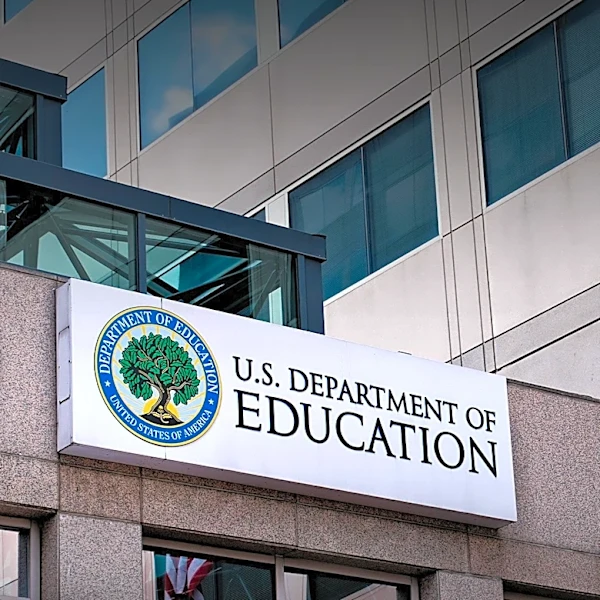
Goodman and Overmann's upcoming book, 'American Odyssey: Past, Present, and Future of International Education in the United States,' is expected to provide a comprehensive historical context and future outlook for international education in the U.S. This publication could serve as a critical resource for policymakers and advocates, potentially influencing future legislative decisions regarding funding and support for exchange programs. The authors aim to educate future Congresses, administrations, and international officers on the historical significance and lessons learned from international education, emphasizing its integral role in American culture and governance. Continued advocacy and educational efforts will be necessary to ensure that the benefits of international exchange are widely understood and supported, particularly in light of past budget cuts to Department of Education programs under previous administrations. The ongoing dialogue among experts and policymakers will likely focus on how to sustain and expand these programs to meet evolving global challenges.
Beyond the Headlines
The discussion about international education extends beyond mere academic exchange, touching upon deeper implications for U.S. foreign policy and national identity. The historical context provided by Goodman, tracing international education from the founding of Harvard University to modern times, reveals its consistent role in shaping America's engagement with the world. The early efforts to counterbalance Nazi propaganda through public diplomacy and the post-World War II initiatives to rebuild and democratize nations highlight the strategic importance of these programs. The challenge of ensuring that the benefits of international exchanges are understood by those who do not travel abroad points to a need for broader public awareness campaigns. International education is not just about individual scholarships or study abroad; it represents a global ecosystem of cross-cultural engagement that fosters mutual understanding and addresses complex global issues. The resilience of these programs through periods of isolationism and political disagreement suggests their enduring value, but continuous effort is required to integrate international engagement into institutional objectives and secure sustained funding.