

What's Happening?
A new study published in the journal Nature, led by researchers at the University of Arizona and the University of South Florida, indicates that climate change forecasts are significantly underestimating threats to biodiversity, particularly for cacti.
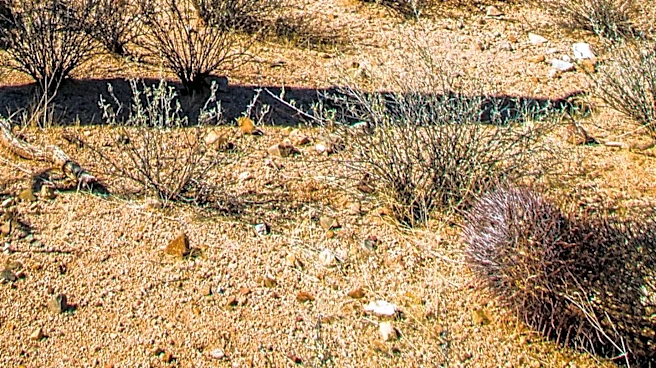
The research integrated severe drought projections into existing climate distribution models, a novel approach that revealed a dramatic decline in suitable habitat for the majority of nearly 1,000 cactus species studied. More than a quarter of these species could lose at least 80% of their suitable habitat by the end of the century. This level of loss could lead to these species being classified as Critically Endangered by the International Union for Conservation of Nature, effectively doubling the current number in this category. The study highlights that while cacti are known for their resilience in arid environments, their adaptations may not be sufficient to withstand longer and more intense droughts predicted for the future. Impacts are already visible in the U.S. Southwest, with significant mortality among chollas, prickly pears, and saguaros.
Why It's Important?
This research is crucial because it challenges conventional climate modeling, which typically relies on long-term temperature and rainfall averages, often overlooking the devastating impact of extreme weather events like severe droughts. By incorporating these extremes, the study provides a more accurate and alarming picture of future biodiversity loss. The potential reclassification of numerous cactus species as Critically Endangered underscores a broader ecological crisis, as these plants are vital to their ecosystems, providing habitat and food for many animal species. The findings suggest that many other plant groups, not just cacti, could face similar or worse fates when extreme weather events are factored into climate scenarios. This has significant implications for conservation strategies and resource management in arid and semi-arid regions across the Americas, including the U.S. Southwest, where iconic species like the saguaro are already experiencing decline.
What's Next?
The findings from this study are expected to inform updated conservation assessments by organizations like the IUCN Red List, likely leading to a more dire outlook for cacti and potentially other plant species. Researchers anticipate that the integration of extreme weather data into future climate models will become more common, providing a more comprehensive understanding of climate change impacts. Conservation efforts will need to adapt to these new projections, focusing on mitigating the effects of severe droughts and protecting vulnerable habitats. This may involve re-evaluating current conservation priorities and developing more robust strategies to safeguard biodiversity against increasingly frequent and intense extreme weather events. The study also emphasizes the need for continued monitoring and citizen science initiatives, such as iNaturalist, to gather real-time data on species distribution and health.
Beyond the Headlines
The study's implications extend beyond immediate conservation concerns, highlighting a fundamental flaw in how climate change impacts have been traditionally assessed. The underestimation of extreme weather events in large-scale forecasts suggests that the global biodiversity crisis may be more advanced than previously understood. This raises ethical questions about humanity's responsibility to protect species that are uniquely adapted to their environments but are now overwhelmed by human-induced climate shifts. Legally, these findings could influence environmental policy and international agreements, pushing for more aggressive climate action and stricter protections for endangered species. Culturally, the decline of iconic species like the saguaro in the U.S. Southwest could lead to a loss of natural heritage and impact indigenous communities that have deep connections to these plants. The research underscores the interconnectedness of ecosystems and the cascading effects of climate change on all forms of life.