






What's Happening?
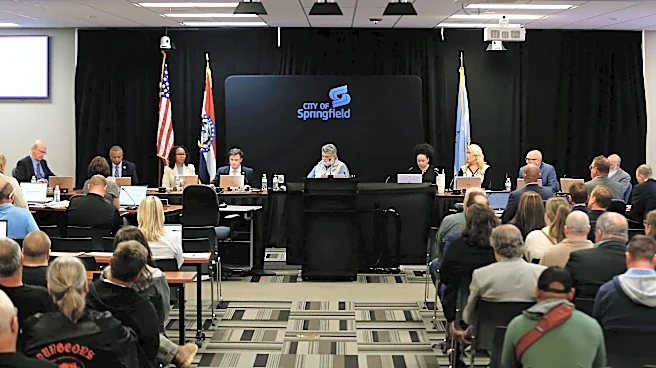
The Aurora City Council in Colorado recently blocked an attempt to reconsider a moratorium on new data centers, despite significant public opposition and calls for action from residents. During a late-night meeting, a motion to suspend council rules,
which would have allowed for a discussion on the moratorium, failed with a 6-5 vote. Current council rules require a seven-vote supermajority to move such a motion forward. This decision marks another setback in a prolonged dispute over the proposed 900,000-square-foot Trident data center, which is planned near residential areas in Aurora. Residents expressed their concerns for hours, extending public comment into the early morning. Mayor Mike Coffman, who previously supported an indefinite moratorium, stated he would reintroduce the motion at the next regular City Council meeting.
Why It's Important?
This development is significant for Aurora residents and highlights the growing tension between community concerns and industrial development. The failure to reconsider the moratorium means that, for now, the city lacks a formal pause on new data center projects, leaving the door open for developments like the Trident data center to proceed under existing regulations. Residents are primarily concerned about the potential negative impacts of large data centers, including excessive water consumption, increased electricity rates, and noise pollution. The council's decision, despite strong public sentiment, underscores the challenges in balancing economic development interests with environmental and quality-of-life concerns of the local population. This situation could lead to increased public activism and political pressure on council members, particularly given Mayor Coffman's commitment to reintroducing the motion.
What's Next?
Mayor Mike Coffman has publicly committed to reintroducing the motion for a data center moratorium at the next regular City Council meeting, scheduled for November 9. This indicates that the debate over data center development in Aurora is far from over. Residents and advocacy groups are likely to continue their efforts to pressure council members to support a moratorium and implement stricter regulations. The proposed Trident data center, which has been a focal point of this controversy, may face further scrutiny and opposition. Additionally, the city may continue its ongoing process of crafting new regulations for data centers, which currently include a ban on evaporative cooling systems and discussions on setback distances from residential areas. The outcome of the next council vote will be crucial in determining the immediate future of data center development in Aurora.
Beyond the Headlines
The Aurora data center controversy reflects a broader national trend where communities grapple with the environmental and social costs of rapidly expanding digital infrastructure. Data centers are energy-intensive and require substantial water for cooling, raising concerns about resource depletion and carbon footprints, especially in regions facing water scarcity. This situation also highlights the power dynamics between large corporations and local communities, and the role of municipal governance in mediating these interests. The public's strong reaction in Aurora, including extended public comments and expressions of 'shame,' points to a growing demand for greater transparency and citizen participation in land-use decisions that have significant environmental and quality-of-life implications. The outcome in Aurora could set a precedent for how other U.S. cities approach the regulation of data centers and other large-scale industrial projects.