



What's Happening?
The Ursid meteor shower is set to peak tonight, marking the last major meteor display of 2025. This annual event occurs as Earth passes through the debris trail left by comet 8P/Tuttle. The shower is active from December 17 to December 26, with peak activity
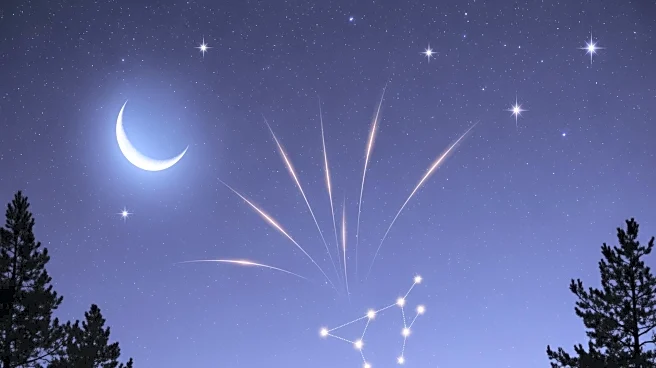
expected overnight on December 21-22. During this peak, skywatchers can expect to see up to 10 meteors per hour under optimal dark sky conditions. The meteors will appear to originate from the constellation Ursa Minor, specifically near the bright star Kochab, which is visible above the northern horizon throughout December. The timing of the peak coincides with the new moon phase, providing near-perfect conditions for viewing due to minimal moonlight interference.
Why It's Important?
The Ursid meteor shower offers a unique opportunity for both amateur and seasoned astronomers to observe a natural celestial event. This year, the shower's peak aligns with the winter solstice, providing the longest night of the year for optimal viewing. The event not only serves as a reminder of the dynamic nature of our solar system but also encourages public interest in astronomy and science. For those interested in astrophotography, the Ursids present a chance to capture stunning images of meteors against the backdrop of a dark December sky. The event also highlights the importance of preserving dark skies, free from light pollution, to continue enjoying such natural phenomena.
What's Next?
As the Ursid meteor shower concludes, skywatchers can look forward to other astronomical events in the coming year. The next major meteor shower, the Quadrantids, is expected to peak in early January 2026. Meanwhile, those interested in capturing images of the Ursids are encouraged to share their photos with astronomy communities and publications. The event also serves as a precursor to discussions on light pollution and its impact on astronomical observations, potentially influencing future policies aimed at preserving dark skies.