









What's Happening?
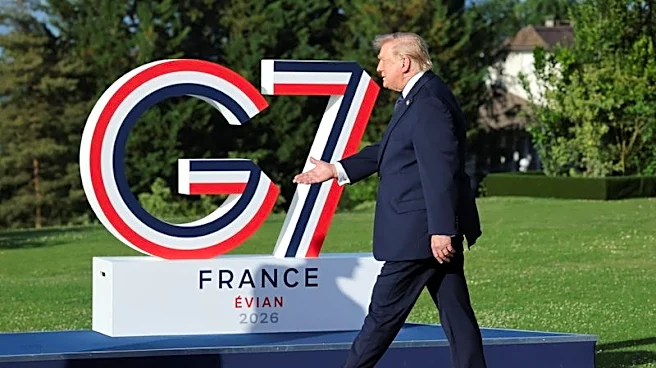
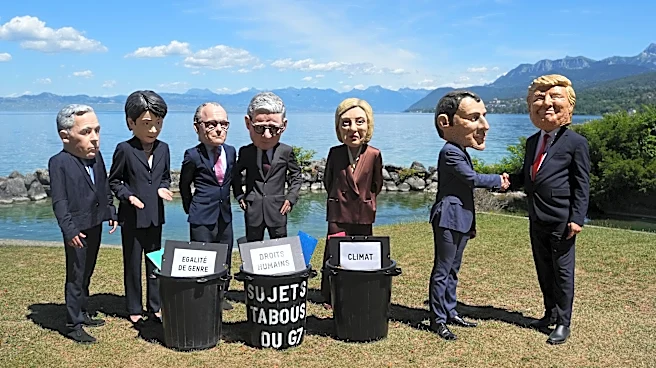
During a G7 summit in Evian-les-Bains, France, leaders, including U.S. President Donald Trump, signed a joint declaration to enhance military support for Ukraine and intensify sanctions against Russia. The declaration emphasizes the G7's unified stance
in supporting Ukraine's sovereignty and territorial integrity. It also highlights a strategic shift, with the U.S. and Iran reaching an agreement to end hostilities, facilitating further economic measures against Russia. The G7 leaders committed to increasing air defense capabilities for Ukraine and considering licenses to boost Ukraine's military production. Additionally, the declaration supports an international mission to protect trade in the Strait of Hormuz, led by the U.K. and France.
Why It's Important?
The G7's commitment to Ukraine and sanctions against Russia marks a significant geopolitical stance, reinforcing Western support for Ukraine amidst ongoing tensions with Russia. This move could impact global energy markets, especially with the focus on alternative energy routes and potential Canadian contributions to global supply. The U.S.-Iran agreement also plays a crucial role, potentially stabilizing a volatile region and allowing for more focused economic pressure on Russia. These developments could influence international relations, trade dynamics, and military strategies, affecting stakeholders across various sectors.
What's Next?
The G7's decisions may lead to increased military aid to Ukraine and further economic sanctions on Russia, potentially escalating tensions. The international mission in the Strait of Hormuz could stabilize trade routes, impacting global oil prices. Stakeholders, including political leaders and businesses, will likely monitor these developments closely, with potential responses from Russia and other affected nations. The focus on alternative energy routes may also drive investments in infrastructure and energy projects.