



What's Happening?
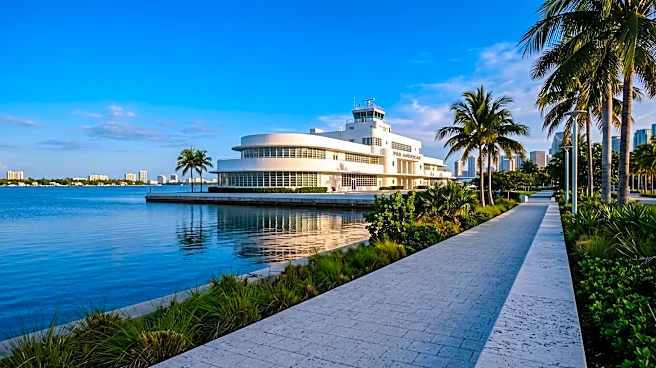
The Museum of Miami has proposed a long-term public-private partnership for the historic Pan Am terminal at Dinner Key, which currently houses Miami City Hall. This proposal comes after the Miami City Commission voted to keep City Hall at the terminal,
a decision preservationists view as a temporary solution. The museum's plan aims to preserve the city's ownership of the waterfront property, expand public access, and protect the site from future privatization and overdevelopment. The proposal envisions the terminal as a civic commons, featuring a new museum building, an archive for the museum's artifacts, and public spaces for civic and cultural use. It also includes plans for a coastal recreational park with a continuous baywalk, native vegetation, and protected water views, emphasizing public access to the waterfront, which is increasingly scarce in Miami.
Why It's Important?
This initiative is significant for Miami's urban development and public access to its valuable waterfront. The city's waterfront properties are increasingly subject to high-end retail, dining transformations, and large corporate interests, making public access and preservation a growing concern. The Museum of Miami's proposal offers a model for how public land can be protected from purely commercial development while still serving the community. It highlights a broader tension between economic development pressures and the desire to maintain public spaces and historical sites. The outcome of this proposal could set a precedent for how other cities manage their public waterfronts, balancing commercial interests with community needs and historical preservation. The ongoing debate reflects a critical juncture in urban planning, where decisions made today will shape the accessibility and character of Miami's waterfront for generations.
What's Next?
The Museum of Miami has sent a letter of intent to the city, which has been acknowledged and referred to the City Manager. The museum has not yet received a further response. The proposal outlines two formal pathways for moving forward: the museum can submit a formal unsolicited proposal with an application fee, or the city can initiate a city-led process for the site's civic reuse. The museum is also requesting that the city determine if its proposal meets state legal requirements for a 'qualifying project' of a public-private partnership and authorize an interim agreement for pre-development work. However, a city spokesperson has stated that the city is not currently entertaining proposals for a different use of the Dinner Key facilities, indicating potential hurdles for the museum's plan.
Beyond the Headlines
The situation at Dinner Key reflects a larger national trend where valuable urban waterfronts are increasingly privatized or developed for commercial gain, often at the expense of public access and historical preservation. The Museum of Miami's proactive stance highlights the ethical and cultural dimensions of urban planning, advocating for a model that prioritizes community benefit over purely financial returns. This debate touches upon the long-term vision for cities: whether they should be primarily engines of economic growth or vibrant public spaces that foster cultural engagement and civic life. The struggle to preserve public waterfronts also underscores issues of environmental stewardship, as maintaining natural coastal areas can offer ecological benefits and resilience against climate change impacts, such as rising sea levels.