


What's Happening?
Severe drought conditions have caused Lake McConaughy, Nebraska's largest reservoir, to drop below 23% capacity. This significant reduction in water levels has exposed the submerged ruins of Old Lemoyne, a historic pioneer town that was dismantled and
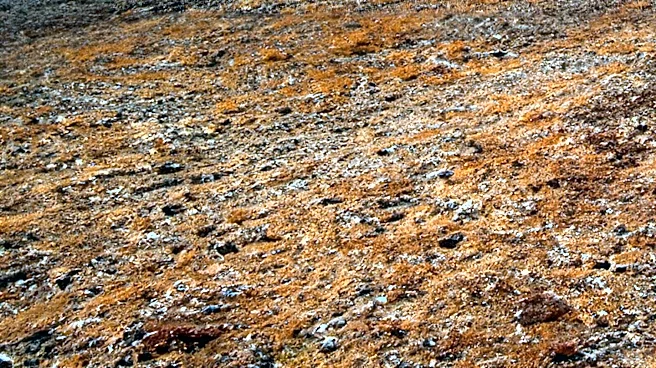
flooded in 1941 to facilitate the construction of Kingsley Dam. The exposed lakebed has become a 'virtual time capsule,' revealing concrete foundations and other remnants of the former community. Local historian Calvin Berry, whose family has deep roots in the area dating back to 1907, highlights the personal connection to the past that these newly visible ruins provide. Old Lemoyne was once a bustling rail shipping town, crucial for ranchers transporting cattle to Omaha markets. While many structures were removed or relocated before the flooding, the exposed site offers a glimpse into the town's past, including the vault foundation of the first Adams Bank & Trust, known for a dramatic 1930s bank robbery where a safety trick involving poker chips prevented a young banker from being locked in.
Why It's Important?
The emergence of Old Lemoyne from beneath Lake McConaughy offers a unique opportunity for historical and archaeological study, providing tangible links to Nebraska's pioneer and ranching heritage. This event underscores the profound impact of environmental changes, specifically drought, on both natural landscapes and historical preservation. For local communities, it represents a reconnection with their past, allowing residents like Calvin Berry to physically walk through the streets of a town that has been underwater for 85 years. The stories unearthed, such as the bank robbery at Adams Bank & Trust, enrich the local narrative and provide insights into the resilience and ingenuity of early settlers. Economically, while the low water levels negatively impact recreational activities like boating, they create a temporary tourism draw for those interested in history and the unusual phenomenon of a resurfaced town. The situation also highlights the long-term consequences of large-scale infrastructure projects like the Kingsley Dam, which, while providing essential resources, also necessitated the displacement of communities and the submergence of historical sites.
What's Next?
Water managers anticipate that the low water levels at Lake McConaughy will persist through the winter due to ongoing strict irrigation limits upstream and a lack of mountain snowpack. This prolonged period of exposure means that local historians and the public will have more time to explore the remnants of Old Lemoyne. The slow recovery of the reservoir will allow for continued examination of the historical site, potentially leading to further discoveries and deeper understanding of the town's layout and daily life. Local authorities and historical societies may organize guided tours or educational initiatives to capitalize on this unique opportunity for public engagement with the region's past. However, the long-term implications of persistent drought for the reservoir's capacity and the surrounding ecosystem remain a concern, potentially influencing future water management policies and conservation efforts in Nebraska.
Beyond the Headlines
The reappearance of Old Lemoyne raises broader questions about the intersection of environmental change, historical memory, and community identity. As climate patterns shift and water resources become increasingly strained, similar submerged towns and historical sites across the U.S. may become visible, prompting a re-evaluation of how these sites are managed, preserved, and interpreted. This event serves as a powerful reminder of the transient nature of landscapes and the human imprint upon them. It also highlights the ethical considerations involved in large-scale engineering projects, where the benefits of resource management often come at the cost of displacing communities and submerging their heritage. The stories of resilience, like the relocation of homes and the cleverness displayed during the bank robbery, offer valuable lessons about adaptation and community spirit in the face of significant change. The phenomenon encourages a deeper appreciation for the hidden histories beneath our modern landscapes and the importance of documenting and preserving these narratives for future generations.