



What's Happening?
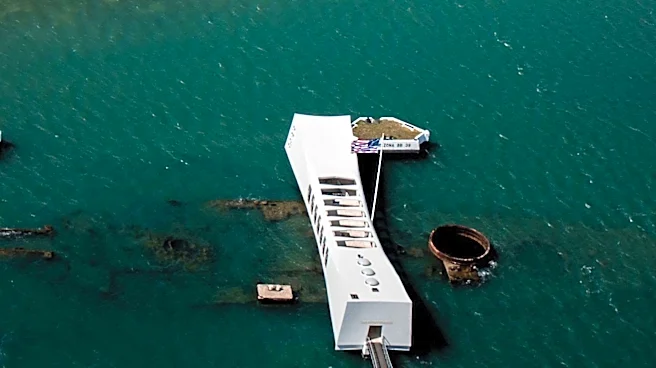
A new report, 'The True Cost of the U.S. Military in Hawai'i,' co-authored by experts with over 45 years of experience studying the U.S. military, challenges long-held assumptions about the economic benefits of the armed forces' presence in Hawai'i. The report emerges
as leases for approximately 46,000 acres of military base land, originally leased from the state for a token fee in the 1960s, are set to expire starting in 2028. The study asserts that the Pentagon and other proponents have significantly exaggerated the military's economic contribution to the state. While official figures often cite around $10 billion in annual military spending for FY2023, the report calculates the actual economic impact to be closer to $7.2 billion, nearly 30% less. This discrepancy is attributed to the fact that substantial portions of Pentagon spending, including salaries and contracts, do not remain within the local Hawaiian economy but are paid to individuals and corporations outside the state. The report also highlights that the military's presence occupies 5.6% of the state's land, a higher proportion than any other U.S. state, and 25% of O'ahu.
Why It's Important?
This report is important because it re-evaluates the economic narrative surrounding the U.S. military's presence in Hawai'i, a critical strategic location in the Pacific. By presenting a lower economic impact figure, the study challenges the justification for the military's extensive land use and its perceived role as a primary economic driver. The findings suggest that the military's contribution to Hawai'i's Gross Domestic Product (GDP) is 6.4%, rather than the 9.2% often claimed, placing it behind at least five other industries. This re-evaluation could significantly influence ongoing discussions about the expiring land leases and the future of military operations in the state. Furthermore, the report highlights overlooked costs, such as the military's impact on the housing crisis by driving up rents, environmental damage, and the inefficiency of military spending as a job creator compared to other sectors like healthcare or education. These insights could empower local communities and policymakers to advocate for alternative land uses and economic development strategies that prioritize local residents and sustainable growth.
What's Next?
With the military land leases beginning to expire in 2028, the findings of 'The True Cost of the U.S. Military in Hawai'i' report are likely to intensify debates among the state of Hawai'i, the U.S. military, and indigenous-led agencies like the Office of Hawaiian Affairs. The report's assertion that returning most or all of the leased territory would not significantly alter the military's overall presence, as the leases represent less than 20% of the military's total occupied land in the state, could bolster arguments for land repatriation. The Army has already indicated it will relinquish nearly 800 acres of a controversial training ground, suggesting a potential precedent for future land returns. Discussions will likely focus on the fair market value of the land, with the report estimating up to $134 billion in lost rental revenue for Hawai'i, and the billions needed for environmental cleanup. Stakeholders will need to consider the report's proposed alternatives to the military's current strategy, which include converting former base lands into spaces for learning, cultural preservation, ecological repair, and economic development in non-military sectors.
Beyond the Headlines
The report's findings delve into deeper implications beyond immediate economic figures, touching upon ethical and cultural dimensions of the U.S. military's historical presence in Hawai'i. The mention of the military's role in seizing indigenous lands after the overthrow of the Hawaiian monarchy in the 19th century adds a significant historical context to the current land lease debates. This historical backdrop underscores the ongoing struggle for indigenous sovereignty and land rights. The report also highlights the social costs, such as the military's contribution to the housing affordability crisis, particularly on O'ahu, where generous housing allowances for military personnel inflate rental prices for local non-military residents. This creates housing instability and forces residents out of the state, revealing a less obvious but profound impact on the social fabric of Hawai'i. The comparison of job creation efficiency between military spending and other industries suggests a long-term shift in economic strategy could lead to more sustainable and locally beneficial development, fostering a more resilient Hawaiian economy less dependent on military expenditures.