



What's Happening?
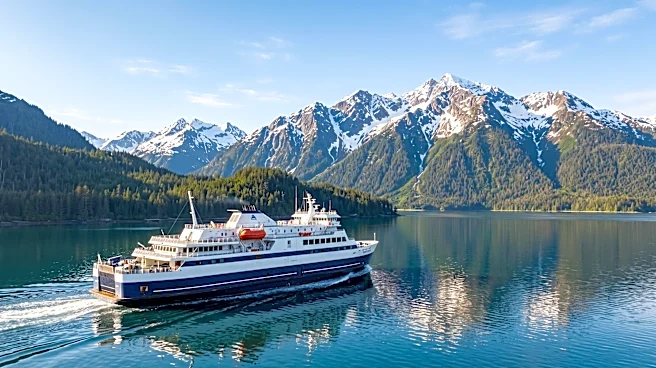
Governor Mike Dunleavy has announced that the Alaska Marine Highway System (AMHS) will receive more than $410 million in U.S. government funding. This significant investment is aimed at supporting crucial resources for rural Southeast Alaska. The Alaska Department
of Transportation and Public Facilities successfully submitted six applications for this funding. Governor Dunleavy highlighted that these resources will build upon past successes and ensure reliable ferry service for decades. He extended gratitude to the Department of Transportation and Public Facilities staff, the Congressional delegation, and President Trump's administration for recognizing the value of investing in Alaska. The funding includes $161.2 million for operational support across over 20 communities, covering vessel operations, fuel, and maintenance. A substantial $153.4 million is allocated for the design and construction of a replacement for the MV LeConte ferry, which was built in 1974 and serves multiple communities including Juneau, Hoonah, and Gustavus. Additionally, $37.6 million will go towards the Cascade Point Ferry Terminal to shorten sailing times and reduce operating costs, while $33.4 million is for modernizing the Kake Ferry Terminal. The Saxman Seaport will receive $20.6 million to expand capacity and improve freight movements, and $4 million is designated for customer service and operations modernization, including new reservation systems.
Why It's Important?
This federal funding represents a historic investment in Alaska's ferry system, which is vital for many of the state's 230 communities not connected by road. Senator Dan Sullivan emphasized that marine transportation is not optional for these areas, as it is how residents meet their everyday needs. The investment will significantly improve the reliability, accessibility, and efficiency of the AMHS, directly impacting the daily lives and economic activities of coastal communities. The replacement of the MV LeConte will enhance fleet flexibility and fuel efficiency, addressing long-standing infrastructure needs. Modernizing terminals and expanding seaports will facilitate better freight movement and connectivity, which are crucial for local economies. The focus on operational support ensures the continuity of essential services, while improvements in customer service and reservation systems will enhance the user experience. This funding underscores the federal government's recognition of Alaska's unique transportation challenges and the necessity of a robust marine highway system for the state's social and economic well-being.
What's Next?
The allocated funds will be utilized for various projects, including the design and construction of the MV LeConte replacement, which aims to improve reliability and efficiency. Construction for the Cascade Point Ferry Terminal, initially delayed, is now expected to commence next year, following updated design and review mandates from the U.S. Army Corps of Engineers. The modernization of the Kake Ferry Terminal and the expansion of the Saxman Seaport will proceed to accommodate larger vessels and enhance capacity. The $4 million for customer service and operations modernization will lead to the implementation of modern reservation systems and improved operating efficiency for AMHS. These projects are expected to unfold over the coming years, with the goal of providing reliable ferry service for decades, consistent with the system's 2045 Long Range Plan. The continued collaboration between state and federal entities will be crucial for the successful execution of these initiatives.
Beyond the Headlines
The substantial federal investment in the Alaska Marine Highway System highlights a broader recognition of the critical role infrastructure plays in supporting remote and geographically isolated communities. Beyond the immediate economic and logistical benefits, this funding addresses issues of equitable access to essential services, which can have significant social and cultural implications for Alaskans. The emphasis on modernizing vessels and terminals also reflects a commitment to long-term sustainability and resilience in the face of environmental changes and evolving transportation needs. This initiative could serve as a model for other regions with similar geographical challenges, demonstrating how targeted federal support can bolster vital public services and foster regional development. The project also underscores the importance of inter-agency cooperation and the impact of congressional advocacy in securing funding for state-level infrastructure projects.