







What's Happening?
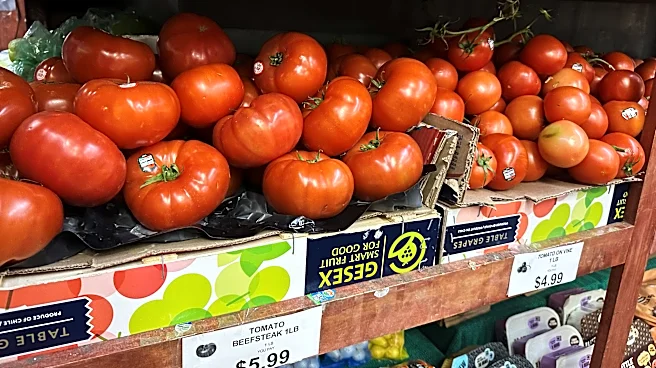
President Trump recently claimed on Truth Social that he is making food more affordable, citing falling prices for specific grocery items such as avocados, fresh berries, and pantry staples. However, this assertion contrasts with recent data from the
Labor Department, which reported a nearly 3% increase in grocery prices in April compared to the previous year. While some items have seen price drops, overall food prices have risen since Trump's inauguration, with economists predicting continued increases due to factors like rising diesel fuel costs. The president's claims are based on data from Circana, a private company, but the broader economic context shows a different picture, with many items still experiencing price hikes.
Why It's Important?
The discrepancy between President Trump's claims and the broader economic data highlights ongoing concerns about food affordability in the U.S. While specific items may have decreased in price, the overall trend of rising grocery costs affects consumers nationwide. This situation underscores the complexity of economic policies and their impact on everyday expenses. The rising costs are attributed to various factors, including tariffs, droughts, and increased shipping costs, which are influenced by Trump's policies. As food prices continue to be a significant concern for Americans, this issue could influence public opinion and political dynamics, especially with upcoming elections.
What's Next?
As grocery prices remain a critical issue, it is likely that both political parties will address affordability in their platforms, potentially influencing voter behavior in the upcoming midterm elections. Economists and policymakers will continue to monitor inflation trends and their impact on consumer confidence. The administration may face pressure to implement measures to mitigate rising costs, such as adjusting tariffs or exploring alternative supply chain solutions. Public discourse around economic policies and their real-world effects will likely intensify as stakeholders seek solutions to alleviate the financial burden on consumers.