
What's Happening?
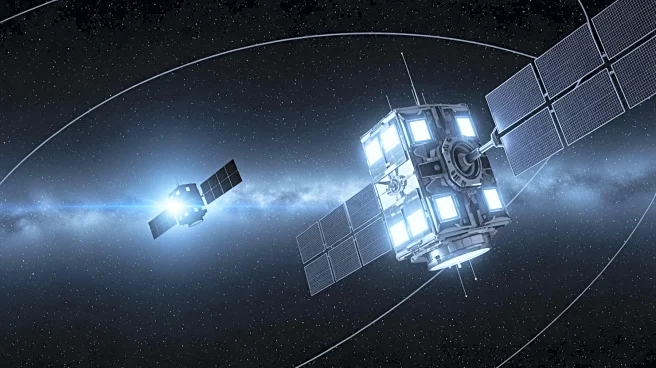
On December 12, a Starlink satellite narrowly avoided a collision with a newly launched satellite from China, which had been in orbit for only 48 hours. The incident occurred at an altitude of 560 km,
with the two satellites coming within 200 meters of each other. SpaceX's vice president of engineering, Michael Nicholls, noted that there was no coordination or deconfliction with existing satellites, raising concerns about the lack of a global space traffic control system. The Chinese satellite's origin remains unclear, as it was part of a mission that included launches from multiple countries. The absence of an international space surveillance and coordination system is seen as a significant risk, as highlighted by astronomer Jonathan McDowell.
Why It's Important?
The near-collision underscores the growing need for an international space traffic management system. As more countries and private companies launch satellites, the risk of in-orbit collisions increases, potentially leading to significant damage and disruption of satellite services. The incident highlights the lack of regulatory frameworks and communication protocols between nations, which could lead to more frequent and severe space accidents. Establishing a coordinated system could prevent such close encounters and ensure the safety and sustainability of space operations.
What's Next?
The incident may prompt discussions among international space agencies and private companies to develop a comprehensive space traffic management system. Stakeholders might push for agreements on satellite tracking and communication protocols to prevent future near-misses. The development of such a system would require collaboration between major spacefaring nations, including the U.S. and China, to ensure effective monitoring and coordination of satellite activities.