





What's Happening?
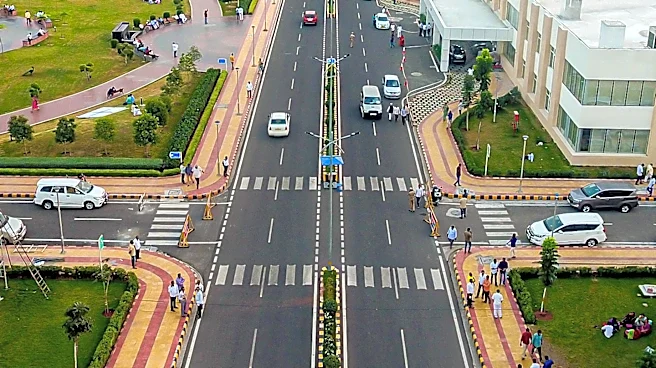
A new traffic signal, marked crosswalks, and a green-painted bike lane have been installed at the intersection of Sparks Boulevard and Ion Drive, near Sawgrass Lane, in Reno. This project, undertaken by the Regional Transportation Commission (RTC), aims
to improve safety and traffic flow for drivers, pedestrians, and bicyclists. The upgrades include new signal equipment and modifications to the roadway, such as work on the center median. The signal was scheduled for activation on November 9, and drivers are advised to exercise caution as crews finalize any remaining work. The RTC estimated the project's cost at nearly $3 million, funded by fuel tax revenue.
Why It's Important?
This infrastructure improvement is important for enhancing urban mobility and safety in the Sparks area. By organizing traffic more effectively, the new signal and designated lanes are expected to reduce accidents involving vehicles, pedestrians, and cyclists. The investment of nearly $3 million, funded by fuel tax revenue, highlights a commitment to local infrastructure development and public safety. For residents and commuters in Reno, these changes mean a more predictable and secure travel experience, potentially reducing congestion and improving the overall quality of life in the community. The project also underscores the ongoing efforts by local transportation commissions to adapt urban environments to accommodate various modes of transport.
What's Next?
Following the activation of the new traffic signal on November 9, the immediate next steps involve the completion of any remaining construction work by the crews. Drivers in the area are advised to continue using caution as they adjust to the new traffic patterns and infrastructure. The Regional Transportation Commission will likely monitor the effectiveness of these improvements in managing traffic flow and enhancing safety. Future assessments may determine if similar projects are needed at other high-traffic intersections within the region, potentially leading to further investments in urban infrastructure to support growing populations and diverse transportation needs.
Beyond the Headlines
The installation of this new traffic infrastructure reflects a broader trend in urban planning towards creating more multimodal transportation networks. Beyond simply managing vehicle traffic, the inclusion of marked crosswalks and a dedicated green bike lane signifies a recognition of the increasing importance of pedestrian and cyclist safety. This approach not only aims to prevent accidents but also encourages alternative forms of transportation, which can contribute to reduced carbon emissions and improved public health. Such projects often spark discussions about urban design, accessibility for all road users, and the long-term vision for sustainable community development in rapidly growing areas.