



What's Happening?
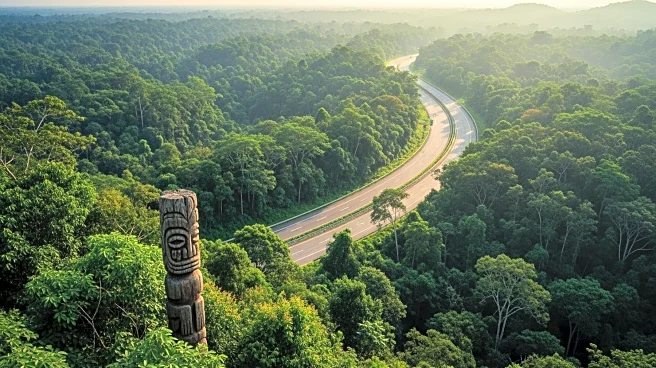
Madagascar is embarking on a significant infrastructure project with the construction of a new highway intended to connect the capital, Antananarivo, to the main port city of Toamasina. The project, initiated by former President Andriy Rajoelina, aims
to reduce travel time from 16 hours to just three, thereby boosting economic activity and facilitating exports. However, the construction has raised concerns among local communities, particularly in the village of Ambohidava, where the highway is set to pass through. Residents, like Neny Fara, fear the loss of ancestral lands and cultural sites, as well as the lack of communication and compensation from the government. The project, funded partly by the Arab Bank for Economic Development in Africa, is expected to cost around $1 billion, with promises of economic benefits such as increased port activity and job creation.
Why It's Important?
The highway project is crucial for Madagascar's economic development, potentially transforming the country's infrastructure and boosting its export capabilities. By improving connectivity between the capital and the port, the highway could significantly enhance trade efficiency, particularly for Madagascar's renowned vanilla exports. However, the project also highlights the tension between development and cultural preservation. The displacement of communities and potential disruption of ancestral lands pose ethical and social challenges. The government's promise of compensation and land formalization is critical to addressing these concerns, but the lack of current agreements has left many residents anxious. The project underscores the broader issue of balancing economic growth with cultural and environmental preservation, a challenge faced by many developing nations.
What's Next?
As construction progresses, the government will need to address the concerns of affected communities, particularly regarding compensation and land rights. Ensuring transparent communication and fair compensation will be essential to mitigate social unrest. Additionally, the government must navigate environmental concerns, as the highway's route has been adjusted to avoid virgin rainforests. The project's success will depend on its ability to deliver promised economic benefits while respecting cultural and environmental values. The new administration's commitment to continuing the project suggests that these issues will remain at the forefront of Madagascar's development agenda.
Beyond the Headlines
The highway project in Madagascar reflects a broader global challenge of infrastructure development in ecologically and culturally sensitive areas. The potential for economic growth must be weighed against the risk of cultural erosion and environmental degradation. This situation highlights the importance of inclusive planning processes that involve local communities and respect traditional land rights. The project also raises questions about the role of international funding in shaping development priorities and the responsibilities of foreign investors in ensuring ethical practices. As Madagascar moves forward, the outcomes of this project could serve as a case study for other nations facing similar development dilemmas.