




What's Happening?
Ukraine's Ministry of Defense has released figures detailing the average cost of its drone strike missions against Russian targets in June. According to their data, neutralizing a Russian serviceman (killing or wounding) cost Ukrainian forces approximately
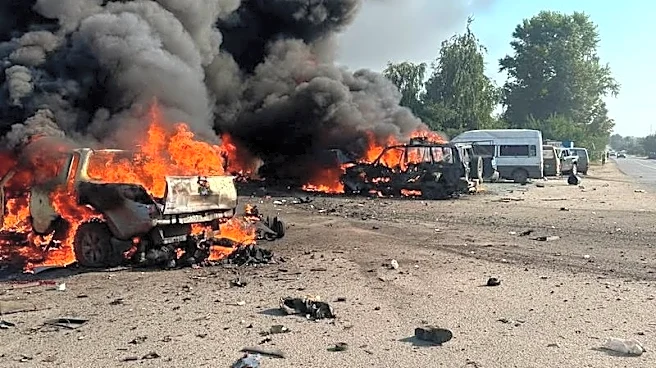
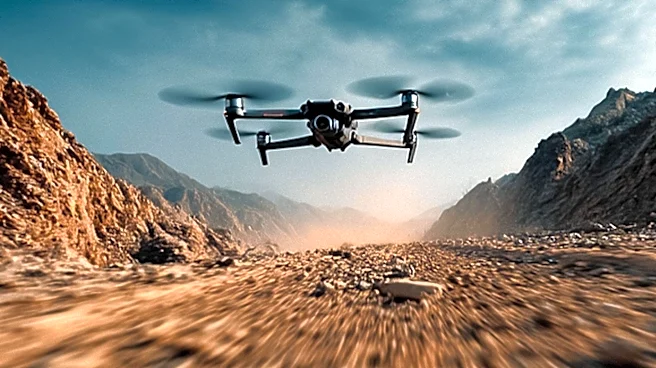
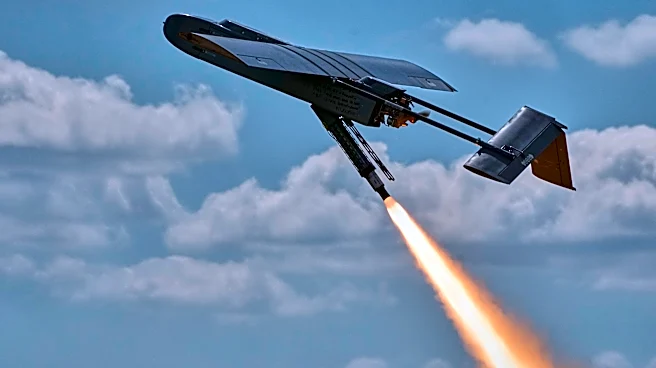
$3,032. In comparison, attacking a piece of Russian equipment cost $2,674, while striking an infrastructure facility was the least expensive at $1,487. These figures highlight a significant shift in Ukraine's drone warfare strategy, as the cost to neutralize a Russian soldier has drastically decreased from an estimated $20,000 in 2024. The ministry attributes this improved cost-effectiveness to its 'Mission Control' system, a digital command-and-control program launched in January. This system analyzes drone missions, collects over 230,000 reports weekly, and has logged more than 50,000 missions, allowing for rapid adaptation to battlefield conditions and assessment of economic efficiency.
Why It's Important?
This data is crucial for understanding the evolving dynamics of modern warfare and Ukraine's strategic approach to maximizing its military resources. The significant reduction in the cost of neutralizing Russian personnel through drone strikes indicates a highly efficient and technologically advanced military operation. This cost-effectiveness allows Ukraine to inflict substantial losses on Russia at a comparatively lower expenditure, potentially altering the balance of attrition in the conflict. The 'Mission Control' system's ability to track and analyze mission data in real-time provides a critical advantage, enabling Ukraine to optimize its drone usage and target selection. Furthermore, the ministry's estimate that Russia incurs losses nearly five times greater than Ukraine's expenditure in these strikes underscores the economic strain placed on the Russian military. This strategic use of drones and data analytics could serve as a model for future conflicts, emphasizing the importance of technological innovation and efficient resource allocation in modern defense.
What's Next?
Ukraine is expected to continue refining its drone warfare strategies and further integrate its 'Mission Control' system to enhance operational efficiency. The ongoing analysis of mission data will likely lead to further optimizations in drone deployment, target prioritization, and resource allocation. As Ukraine aims to make the Russian public feel the war's consequences and pressure Russian President Vladimir Putin into negotiations, the continued cost-effective drone strikes will play a significant role. The success of Ukraine's digital battlefield management system, DELTA, which incorporates 'Mission Control,' may also encourage other nations to invest in similar technologies for military applications. The reported ability to verify successful hits with video evidence through DELTA suggests a high level of accountability and data integrity, which could become a standard in future military operations. The long-term impact could be a shift towards more technologically driven and data-centric warfare, where economic efficiency and precision targeting become paramount.
Beyond the Headlines
The reported cost-effectiveness of Ukraine's drone strikes has broader implications beyond immediate military gains. It highlights a paradigm shift in warfare, where advanced technology and data analytics can significantly level the playing field against larger, more conventionally equipped forces. The ability to inflict disproportionate economic and personnel losses on an adversary at a relatively low cost could redefine military doctrines and procurement strategies globally. This also raises ethical considerations regarding the increasing automation and precision of warfare, and the psychological impact of such tactics on combatants. The emphasis on digital command-and-control systems like 'Mission Control' and DELTA suggests a future where real-time data and artificial intelligence play an even more central role in military decision-making, potentially leading to more efficient but also more impersonal forms of conflict. The success of these systems could also spur a new arms race in drone technology and counter-drone measures.