




What's Happening?
Florida's university system has voted to restrict enrollment to students who are lawfully present in the United States. This decision reverses a 2014 law, signed by then-Governor Rick Scott, which allowed undocumented students who attended Florida high
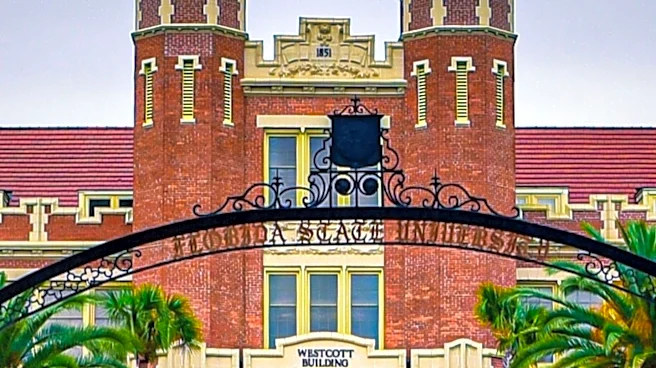
schools to pay in-state tuition. The Board of Governors approved the measure without debate, following preliminary approval in June. The new policy, which takes effect for the 2027-2028 academic year, does not outright ban undocumented individuals but makes them ineligible to enroll in institutions that did not admit all academically qualified applicants in the two most recent academic years. This effectively bars them from most state universities, as institutions like the University of Florida and Florida State University receive far more applications than they can accept. The Florida Board of Education also approved a similar policy for the 28 Florida College System institutions earlier this summer. Governor Ron DeSantis has expressed full support for the change, stating it prioritizes Florida residents.
Why It's Important?
This policy shift significantly impacts thousands of undocumented students in Florida, many of whom have lived in the U.S. since infancy and consider Florida their home. According to the Higher Ed Immigration Portal, approximately 8,000 undocumented students graduate from Florida high schools annually. The new rule effectively closes off a pathway to higher education for these students, potentially limiting their future economic opportunities and contributions to the state's workforce. Critics argue that the policy contradicts the purpose of public higher education by prioritizing immigration status over academic qualifications. Conversely, supporters, including Governor DeSantis, contend that the measure prioritizes Florida residents and those lawfully present in the country for access to state-funded educational resources. This move aligns with a broader national trend of states re-evaluating policies concerning undocumented immigrants' access to public services and benefits.
What's Next?
The new policy will be implemented starting with the 2027-2028 school year, giving current high school students and those planning to attend college in Florida a limited timeframe to adjust. It is likely to face legal challenges from immigrant advocacy groups and civil rights organizations, who may argue that it discriminates based on immigration status or violates equal protection clauses. Universities will need to establish clear procedures for verifying the lawful presence of applicants, which could add administrative burdens. The policy may also influence enrollment demographics at Florida's public universities, potentially leading to a decrease in diversity. Furthermore, this decision could prompt other states to consider similar restrictions, further shaping the national landscape of higher education access for undocumented students. The long-term impact on Florida's economy and social fabric, particularly concerning its future workforce and the integration of its immigrant communities, remains to be seen.
Beyond the Headlines
This policy change delves into complex ethical and societal questions regarding access to education, the definition of residency, and the role of public institutions in serving all members of a community. It highlights the ongoing tension between state sovereignty in immigration matters and federal authority, as well as the debate over the rights and responsibilities of undocumented individuals who have grown up in the U.S. The decision could exacerbate brain drain if academically talented students are forced to seek educational opportunities elsewhere. It also raises questions about the economic implications of limiting access to higher education for a segment of the population that could otherwise contribute to the state's economy. The policy reflects a hardening stance on immigration at the state level, potentially signaling a broader shift in how states approach the integration and opportunities available to undocumented residents, regardless of their ties to the community.