






What's Happening?
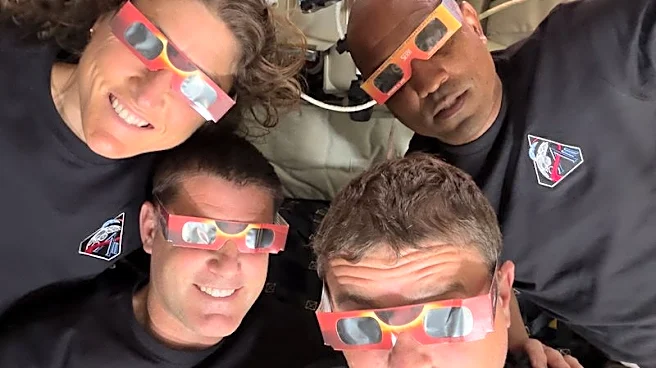
The Artemis II mission, involving three American astronauts and one Canadian, has successfully completed a lunar flyby, marking a significant milestone in NASA's efforts to return to the moon. During this mission, the crew traveled deeper into space than
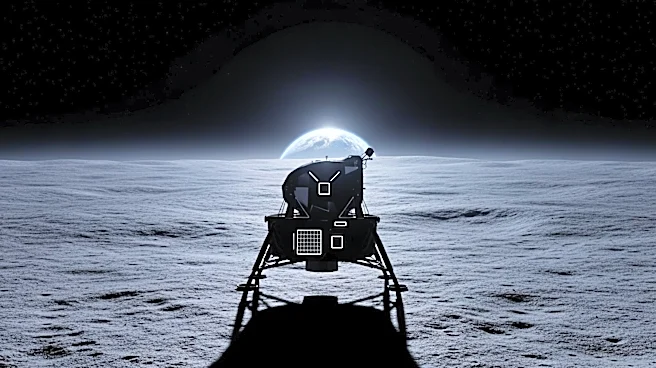
any humans before, capturing breathtaking images of the moon and Earth. The mission included a total solar eclipse, allowing the astronauts to view the far side of the moon, a sight rarely seen by human eyes. The images, provided by NASA, showcase the moon's heavily cratered terrain and the Earth setting behind the lunar surface. This mission is part of NASA's broader Artemis program, which aims to establish a sustainable human presence on the moon.
Why It's Important?
The Artemis II mission represents a pivotal step in NASA's long-term goal of lunar exploration and potential colonization. By successfully executing this flyby, NASA demonstrates its capability to conduct complex space missions, which could pave the way for future manned lunar landings. The mission's success also reinforces international collaboration in space exploration, as it includes astronauts from both the United States and Canada. The images captured during the mission provide valuable scientific data and inspire public interest in space exploration. This mission could have significant implications for technological advancements and international partnerships in space exploration.
What's Next?
Following the successful completion of the Artemis II mission, NASA is expected to continue its preparations for Artemis III, which aims to land astronauts on the lunar surface. This mission will involve further testing of the Orion spacecraft and the Space Launch System, ensuring all systems are ready for a safe and successful landing. The data and experiences gained from Artemis II will inform future missions, helping to refine techniques for lunar exploration and habitation. NASA's continued focus on the Artemis program underscores its commitment to advancing human space exploration and establishing a sustainable presence on the moon.