






What's Happening?
New York lawmakers have passed a $268.5 billion state budget after an eight-week delay, marking the latest budget approval since 2010. The budget includes significant policy changes, such as softening the state's climate change goals and limiting local
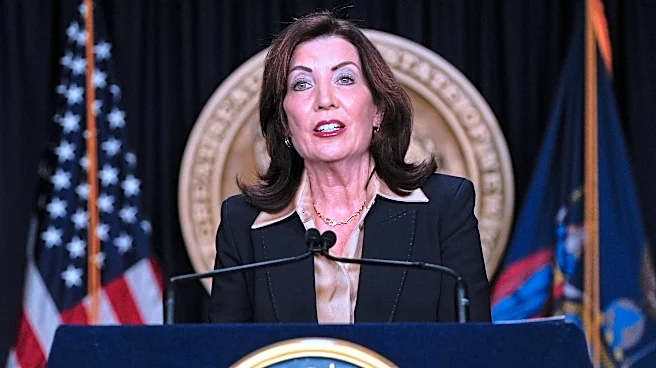
police cooperation with federal immigration authorities. Governor Kathy Hochul, a Democrat, managed to secure legislative victories by convincing most Democratic lawmakers to support a rollback of the climate law and other priorities she deemed essential for affordability. The budget process was contentious, with Hochul and the Legislature blaming each other for the delay. The final budget replaces a mandate to cut greenhouse-gas emissions by 40% by 2030 with a softer goal of a 60% cut by 2040, which has drawn criticism from environmental groups but support from business groups and Republicans.
Why It's Important?
The passage of the budget is significant as it reflects the ongoing political and economic challenges in New York. The changes to climate goals and police cooperation with federal immigration authorities highlight the state's shifting priorities under Governor Hochul's administration. The budget's delay and the contentious negotiations underscore the complexities of balancing fiscal responsibility with policy initiatives. The budget's provisions, such as changes to car insurance laws and increased Medicaid funding, aim to address affordability and healthcare access, impacting millions of New Yorkers. The budget also provides financial relief to struggling cities and public-sector unions, indicating a focus on economic stability and labor support.
What's Next?
The budget's approval sets the stage for upcoming political campaigns, with Governor Hochul and her Republican opponent, Bruce Blakeman, focusing on affordability and cost reduction for New Yorkers. The changes in climate policy and police cooperation may lead to further debates and potential adjustments in future legislative sessions. The budget's impact on insurance premiums and healthcare funding will be closely monitored, as stakeholders assess the effectiveness of these measures. Additionally, the financial support for cities and public-sector unions may influence local governance and labor relations in the coming months.