







What's Happening?
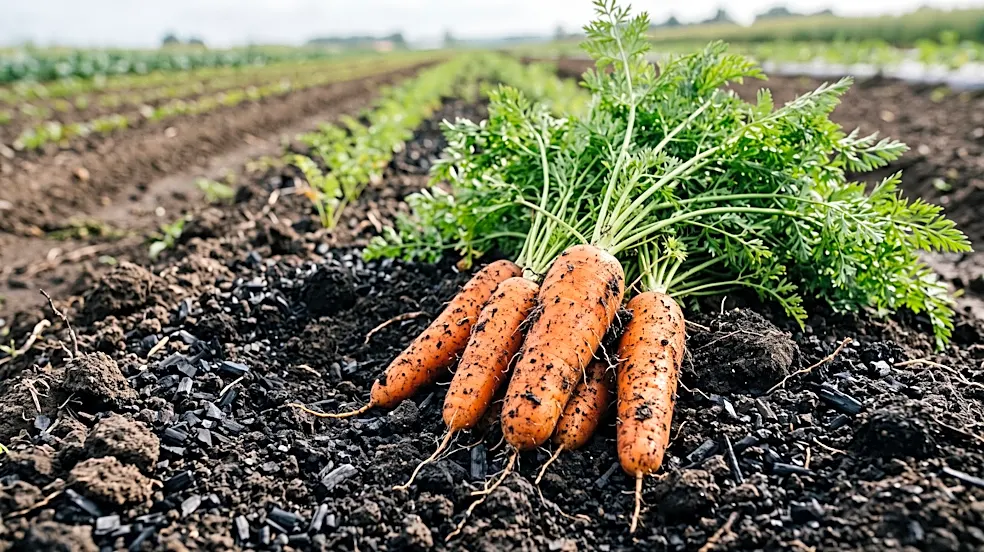
A three-year field and greenhouse study at the University of Wyoming is investigating the use of coal char, a byproduct of coal processing, as a cost-effective alternative to biochar for enhancing soil in specialty vegetable production. Early observations
from the first major field harvest indicate that carrots grown with coal char are notably larger than typical, though comprehensive yield and soil-health data are still being analyzed. Coal char is produced by heating coal in a low-oxygen environment, similar to how biochar is made from plant material. Researchers at the UW’s Center for Carbon Capture and Conversion are testing whether coal char derived from Powder River Basin coal can provide similar or superior soil benefits at a lower cost. The project, funded by the Wyoming Department of Agriculture and the USDA’s Specialty Crop Block Grant Program, builds on earlier successful trials with sugar beets.
Why It's Important?
This research holds significant importance for U.S. agriculture and the economy, particularly in coal-producing regions like Wyoming. If coal char proves to be an effective and cheaper soil amendment, it could offer a dual benefit: providing a new, non-combustion, lower-emission use for coal byproducts and offering farmers a more affordable option for improving soil fertility. This is especially relevant for dry, low-organic-matter soils common in the region. For specialty crop growers, a cost-effective soil booster could enhance yields and crop quality, potentially increasing profitability. Furthermore, it addresses environmental concerns by repurposing a coal byproduct, aligning with efforts to diversify economies in areas historically reliant on coal mining and promoting sustainable agricultural practices.
What's Next?
The University of Wyoming will continue its three-year study, with detailed yield counts and soil measurements from both greenhouse and field components currently undergoing analysis. Future steps include a thorough evaluation of the long-term effects of coal char on soil health, nutrient uptake, and overall crop quality. Researchers will also need to confirm the economic viability and environmental safety of widespread coal char application. If the results remain positive, this could lead to the development of commercial applications for coal char as a soil amendment, potentially creating new markets for coal regions and providing a sustainable solution for agricultural challenges. Further research will also explore its applicability to other specialty crops.
Beyond the Headlines
Beyond its immediate agricultural benefits, this study touches upon broader themes of resource utilization and economic transition in the U.S. The decline of traditional coal markets has prompted a search for alternative uses for coal and its byproducts. Transforming coal char into a valuable agricultural input represents an innovative approach to repurposing industrial waste, contributing to a circular economy. This initiative could also foster collaboration between the energy and agricultural sectors, driving regional economic diversification. The ethical implications of using a coal byproduct in food production will also need careful consideration, including rigorous testing for any potential contaminants and ensuring consumer safety and acceptance.