






What's Happening?
Scientists have analyzed the DNA of Jonathan, an Aldabra giant tortoise estimated to be 194 years old, making him the world's oldest known land animal. The research, published in the journal Science Advances, identified 287 unique gene variants in Jonathan that
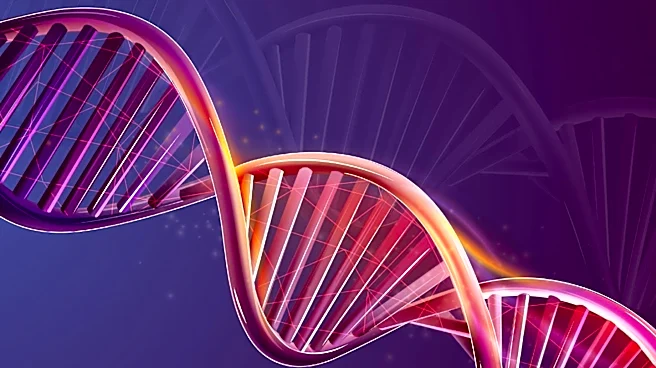
contribute to his extended lifespan by reducing the typical effects of aging. These genes are involved in crucial bodily processes such as inflammation reduction, insulin regulation, DNA damage repair, and cancer suppression. The study also compared Jonathan's epigenome, which controls gene activation, with that of younger Aldabra giant tortoises. Researchers found that the genetic switches regulating Jonathan's DNA repair and metabolism genes remained remarkably similar to those in younger tortoises, a key factor in his longevity. This marks the first time a giant tortoise's epigenome has been investigated, building upon previous genome analysis of Lonesome George, another long-lived tortoise.
Why It's Important?
The findings from Jonathan's genetic analysis hold significant implications for understanding the mechanisms of aging, potentially paving the way for new human treatments. By identifying specific gene variants and epigenetic stability linked to extreme longevity in a species that lives for nearly two centuries, scientists can gain insights into how to combat age-related decline. The study reinforces the idea that mechanisms of aging may be conserved across diverse species, suggesting that discoveries in animals like Jonathan could be transferable to human health. The Kallel Foundation, a longevity research non-profit that led the study, emphasizes that aging is a primary risk factor for most chronic diseases. Therefore, unraveling the secrets of Jonathan's long life could contribute to developing interventions that extend human healthspan and mitigate the impact of age-related illnesses.
What's Next?
Further research will likely focus on delving deeper into the identified gene variants and epigenetic controls to understand their precise functions and interactions. Scientists may explore how these mechanisms can be modulated or mimicked to influence the aging process in other organisms, including humans. The Kallel Foundation aims to leverage these findings to develop treatments for humans, suggesting future studies could involve preclinical trials or drug discovery efforts targeting these longevity pathways. Additionally, comparative studies with other long-lived species, such as immortal jellyfish and naked mole rats, which share some of these longevity-related gene variants, could provide a broader understanding of the universal principles of extreme longevity. The ongoing investigation into how DNA repair systems maintain efficiency over extended periods will be a key area of focus.
Beyond the Headlines
The study of Jonathan's longevity transcends basic biological understanding, touching upon broader philosophical and ethical considerations regarding life extension. The ability to significantly extend human lifespan, if achieved through such research, would raise profound questions about societal structures, resource allocation, and the definition of human life stages. Ethically, the development of anti-aging treatments could exacerbate existing inequalities if access is limited. Legally, it could necessitate re-evaluating retirement ages, healthcare systems, and inheritance laws. Culturally, a dramatically extended lifespan might alter human relationships, career paths, and the perception of mortality. This research also highlights the value of studying exceptional individuals in the natural world as models for understanding complex biological processes, underscoring the importance of biodiversity conservation for scientific advancement.